

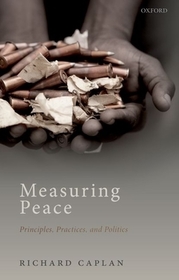
Measuring Peace
Principles, Practices, and Politics
-
20% KEDVEZMÉNY?
- A kedvezmény csak az 'Értesítés a kedvenc témákról' hírlevelünk címzettjeinek rendeléseire érvényes.
- Kiadói listaár GBP 25.49
-
11 508 Ft (10 960 Ft + 5% áfa)
Az ár azért becsült, mert a rendelés pillanatában nem lehet pontosan tudni, hogy a beérkezéskor milyen lesz a forint árfolyama az adott termék eredeti devizájához képest. Ha a forint romlana, kissé többet, ha javulna, kissé kevesebbet kell majd fizetnie.
- Kedvezmény(ek) 20% (cc. 2 302 Ft off)
- Kedvezményes ár 9 206 Ft (8 768 Ft + 5% áfa)
- A kedvezmény érvényes eddig: 2026. június 30.
Iratkozzon fel most és részesüljön kedvezőbb árainkból!
Feliratkozom
11 508 Ft

Beszerezhetőség
Becsült beszerzési idő: A Prosperónál jelenleg nincsen raktáron, de a kiadónál igen. Beszerzés kb. 3-5 hét..
A Prosperónál jelenleg nincsen raktáron.
Why don't you give exact delivery time?
A beszerzés időigényét az eddigi tapasztalatokra alapozva adjuk meg. Azért becsült, mert a terméket külföldről hozzuk be, így a kiadó kiszolgálásának pillanatnyi gyorsaságától is függ. A megadottnál gyorsabb és lassabb szállítás is elképzelhető, de mindent megteszünk, hogy Ön a lehető leghamarabb jusson hozzá a termékhez.
A termék adatai:
- Kiadó OUP Oxford
- Megjelenés dátuma 2021. június 15.
- ISBN 9780198867708
- Kötéstípus Puhakötés
- Terjedelem176 oldal
- Méret 216x137x10 mm
- Súly 230 g
- Nyelv angol 104
Kategóriák
Rövid leírás:
An essential and accessible guide to the assessment of the effectiveness of peace-building policies for all those working in, or studying, the area.
TöbbHosszú leírás:
How can we know if the peace that has been established following a civil war is a stable peace?
More than half of all countries that experienced civil war since World War II have suffered a relapse into violent conflict, in some cases more than once. Meanwhile, the international community expends billions of dollars and deploys tens of thousands of personnel each year in support of efforts to build peace in countries emerging from violent conflict.
This book argues that efforts to build peace are hampered by the lack of effective means of assessing progress towards the achievement of a consolidated peace. Rarely, if ever, do peacebuilding organizations and governments seek to ascertain the quality of the peace that they are helping to build and the contribution that their engagement is making (or not) to the consolidation of peace. More rigorous assessments of the robustness of peace are needed. These assessments require clarity about the characteristics of, and the requirements for, a stable peace. This in turn requires knowledge of the local culture, local history, and the specific conflict dynamics at work in a given conflict situation. Better assessment can inform peacebuilding actors in the reconfiguration and reprioritization of their operations in cases where conditions on the ground have deteriorated or improved. To build a stable peace, it is argued here, it is important to take the measure of peace.
For academics, this book is a welcome addition to scholarship that has long sought to understand the impact that peacebuilding may or may not have on creating a stable peace. For practitioners, it will help them become more rigorous in finding definitions even when they appear elusive and provides valuable insight into which strategic assessment and measurement tools are working for leaders in the peacebuilding industry.
Tartalomjegyzék:
Introduction
Conceptualizing Peace
From Conception to Practice
Assessing Progress
Factors of Post-Conflict Peace Stabilization
Measuring Peace Consolidation
Conclusion

