

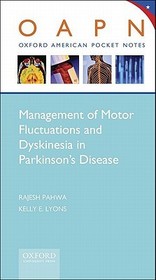
Management of Motor Fluctuations and Dyskinesia in Parkinson's Disease
Sorozatcím: Oxford American Pocket Notes;
-
10% KEDVEZMÉNY?
- A kedvezmény csak az 'Értesítés a kedvenc témákról' hírlevelünk címzettjeinek rendeléseire érvényes.
- Kiadói listaár GBP 9.99
-
4 510 Ft (4 295 Ft + 5% áfa)
Az ár azért becsült, mert a rendelés pillanatában nem lehet pontosan tudni, hogy a beérkezéskor milyen lesz a forint árfolyama az adott termék eredeti devizájához képest. Ha a forint romlana, kissé többet, ha javulna, kissé kevesebbet kell majd fizetnie.
- Kedvezmény(ek) 10% (cc. 451 Ft off)
- Kedvezményes ár 4 059 Ft (3 866 Ft + 5% áfa)
Iratkozzon fel most és részesüljön kedvezőbb árainkból!
Feliratkozom
4 510 Ft

Beszerezhetőség
A kiadónál véglegesen elfogyott, nem rendelhető. Érdemes újra keresni a címmel, hátha van újabb kiadás.
Why don't you give exact delivery time?
A beszerzés időigényét az eddigi tapasztalatokra alapozva adjuk meg. Azért becsült, mert a terméket külföldről hozzuk be, így a kiadó kiszolgálásának pillanatnyi gyorsaságától is függ. A megadottnál gyorsabb és lassabb szállítás is elképzelhető, de mindent megteszünk, hogy Ön a lehető leghamarabb jusson hozzá a termékhez.
A termék adatai:
- Kiadó Oxford University Press
- Megjelenés dátuma 2011. október 13.
- ISBN 9780199841219
- Kötéstípus Spirálkötés
- Terjedelem48 oldal
- Méret 163x104x12 mm
- Súly 43 g
- Nyelv angol 0
Kategóriák
Rövid leírás:
This pocket guide serves as an invaluable resource in aiding in the recognition and management of motor fluctuations and dyskinesia, and ultimately, improving the overall quality of life of persons with PD.
TöbbHosszú leírás:
Levodopa-induced motor complications are extremely prevalent (affecting over half of all PD patients after 4-6 years of levodopa therapy), disabling, and one of the more challenging to treat of all PD symptoms. Motor fluctuations result in the re-appearance or a delay in relief of motor symptoms, following levodopa administration. Motor fluctuations occur more frequently as PD progresses and "on" periods (when motor symptoms are well-controlled) typically get shorter and "off"
periods (when motor symptoms re-emerge) get longer. Levodopa-related dyskinesia can also be disturbing and disabling. There are two major types of dyskinesia - "peak dose" and "diphasic" - which are manifested by variable sequences of parkinsonism, symptom improvement, and dyskinesia. Treatment
strategies for dyskinesia include adjustments in the timing and dose of levodopa, the use of amantadine (an agent with dopaminergic, NMDA receptor antagonist, norandrenergic and possibly anticholinergic activity) and deep brain stimulation surgery.
Part of the Oxford American Pocket Notes series, this volume is designed for general neurologists who are often the first physicians to receive complaints of motor fluctuations and dyskinesia in PD patients. This pocket guide serves as an invaluable resource in aiding in the recognition and management of motor fluctuations and dyskinesia, and ultimately, improving the overall quality of life of persons with PD.
Tartalomjegyzék:
Introduction
Epidemiology
Cost Issues
PD Treatments
Motor Complications
Assessments for Motor Complications
Strategies to Delay Motor Complications
Treatment of Motor Fluctuations
Treatment of Dyskinesia
Adjunctive Therapies: Dopaminergic Adverse Events
Deep Brain Stimulation (DBS)
Additional Therapy or Support
Internet Resources
References

