

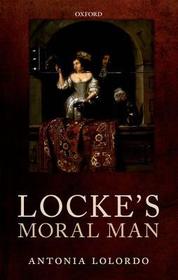
Locke's Moral Man
-
10% KEDVEZMÉNY?
- A kedvezmény csak az 'Értesítés a kedvenc témákról' hírlevelünk címzettjeinek rendeléseire érvényes.
- Kiadói listaár GBP 71.00
-
32 056 Ft (30 530 Ft + 5% áfa)
Az ár azért becsült, mert a rendelés pillanatában nem lehet pontosan tudni, hogy a beérkezéskor milyen lesz a forint árfolyama az adott termék eredeti devizájához képest. Ha a forint romlana, kissé többet, ha javulna, kissé kevesebbet kell majd fizetnie.
- Kedvezmény(ek) 10% (cc. 3 206 Ft off)
- Kedvezményes ár 28 851 Ft (27 477 Ft + 5% áfa)
Iratkozzon fel most és részesüljön kedvezőbb árainkból!
Feliratkozom
32 056 Ft

Beszerezhetőség
Megrendelésre a kiadó utánnyomja a könyvet. Rendelhető, de a szokásosnál kicsit lassabban érkezik meg.
Why don't you give exact delivery time?
A beszerzés időigényét az eddigi tapasztalatokra alapozva adjuk meg. Azért becsült, mert a terméket külföldről hozzuk be, így a kiadó kiszolgálásának pillanatnyi gyorsaságától is függ. A megadottnál gyorsabb és lassabb szállítás is elképzelhető, de mindent megteszünk, hogy Ön a lehető leghamarabb jusson hozzá a termékhez.
A termék adatai:
- Kiadó OUP Oxford
- Megjelenés dátuma 2012. október 4.
- ISBN 9780199652778
- Kötéstípus Keménykötés
- Terjedelem154 oldal
- Méret 220x154x14 mm
- Súly 322 g
- Nyelv angol 0
Kategóriák
Rövid leírás:
Antonia Lolordo presents an original interpretation of John Locke's metaphysics of moral agency, in which to be a moral agent is simply to be free, rational, and a person. Her account bears on Locke's metaphysics and political theory, and helps us understand his wider philosophical project and his accounts of liberty, personhood, and rationality.
TöbbHosszú leírás:
Antonia Lolordo presents an original interpretation of John Locke's conception of moral agency--one that has implications both for his metaphysics and for the foundations of his political theory. Locke denies that species boundaries exist independently of human convention, holds that the human mind may be either an immaterial substance or a material one to which God has superadded the power of thought, and insists that animals possess the ability to perceive, will, and even reason--indeed, in some cases to reason better than humans. Thus, he eliminates any sharp distinction between humans and the rest of the animal kingdom. However, in his ethical and political work Locke assumes that there is a sharp distinction between moral agents and other beings. He thus needs to be able to delineate the set of moral agents precisely, without relying on the sort of metaphysical and physical facts his predecessors appealed to. Lolordo argues that for Locke, to be a moral agent is simply to be free, rational, and a person. Interpreting the Lockean metaphysics of moral agency in this way helps us to understand both Locke's over-arching philosophical project and the details of his accounts of liberty, personhood, and rationality.
fascinating . . . Her picture of Locke's avoidance of metaphysics is, I think, an extremely significant one . . . LoLordo has written a book that is a solid and well-supported addition to the literature, and one that will certainly be provocative.
Tartalomjegyzék:
Introduction
Liberty
Personality
Rationality
Conclusion
Bibliography
Index

