

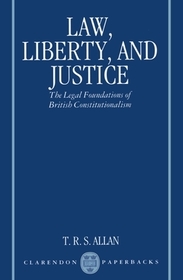
Law, Liberty, and Justice
The Legal Foundations of British Constitutionalism
Sorozatcím: Clarendon Paperbacks;
-
10% KEDVEZMÉNY?
- A kedvezmény csak az 'Értesítés a kedvenc témákról' hírlevelünk címzettjeinek rendeléseire érvényes.
- Kiadói listaár GBP 82.00
-
37 023 Ft (35 260 Ft + 5% áfa)
Az ár azért becsült, mert a rendelés pillanatában nem lehet pontosan tudni, hogy a beérkezéskor milyen lesz a forint árfolyama az adott termék eredeti devizájához képest. Ha a forint romlana, kissé többet, ha javulna, kissé kevesebbet kell majd fizetnie.
- Kedvezmény(ek) 10% (cc. 3 702 Ft off)
- Kedvezményes ár 33 321 Ft (31 734 Ft + 5% áfa)
Iratkozzon fel most és részesüljön kedvezőbb árainkból!
Feliratkozom
37 023 Ft

Beszerezhetőség
Megrendelésre a kiadó utánnyomja a könyvet. Rendelhető, de a szokásosnál kicsit lassabban érkezik meg.
Why don't you give exact delivery time?
A beszerzés időigényét az eddigi tapasztalatokra alapozva adjuk meg. Azért becsült, mert a terméket külföldről hozzuk be, így a kiadó kiszolgálásának pillanatnyi gyorsaságától is függ. A megadottnál gyorsabb és lassabb szállítás is elképzelhető, de mindent megteszünk, hogy Ön a lehető leghamarabb jusson hozzá a termékhez.
A termék adatai:
- Kiadó Clarendon Press
- Megjelenés dátuma 1994. december 15.
- ISBN 9780198259916
- Kötéstípus Puhakötés
- Terjedelem316 oldal
- Méret 234x156x19 mm
- Súly 495 g
- Nyelv angol 0
Kategóriák
Rövid leírás:
In a fresh appraisal of the fundamental doctrines of constitutional law, Allan examines the nature of the rule of law and the separation of powers. He refutes the traditional doctrine of unlimited parliamentary sovereignty, challenges the orthodox distinction between law and convention, and considers the character of common law rights and the nature and purpose of judicial review of administrative action.
TöbbHosszú leírás:
The book makes a fresh appraisal of the main principles of constitutional law, seeking to stimulate renewed debate about the fundamentals of British constitutionalism. Rejecting a purely fromal concept of the rule of law, Allan argues that public law should more fully and openly reflect the principles of liberty and justice which constitute the underlying point and substance of the rule of law. The connection between law and justice is ultimately secured by the primary role of the individual conscience in making judgements about what the law requires. And just as no court is ever an infallible arbiter of legal obligation - the individual may sometimes have to stand by his own conscientious reading of the law - Parliament cannot be accorded unqualified authority to change the law. The sovreignty of Parliament is necessarily limited by residual principles of leberal constitutionalism; any other view would contradict the rule of law. Standard comparisons between written and unwritten constitutions, and traditional accounts of the separarion of powers, ovscure more than they reveal. The interpretation and application of statutes must always be a matter of judicial deliberation and judgement, just as the application of government policies and administrative orders is ultimately subject to the requirements of justice in particular cases.
Scholarly analysis of the fundamental legal doctrines of the British constitution ... highly contemporary in reflecting sophisticated recent restatements of liberal legal philosophy ... his efforts to tease out the implications for liberal constitutional thought of a wide range of public law doctrines deserves respect.

