

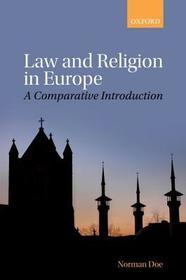
Law and Religion in Europe
A Comparative Introduction
-
10% KEDVEZMÉNY?
- A kedvezmény csak az 'Értesítés a kedvenc témákról' hírlevelünk címzettjeinek rendeléseire érvényes.
- Kiadói listaár GBP 63.00
-
30 098 Ft (28 665 Ft + 5% áfa)
Az ár azért becsült, mert a rendelés pillanatában nem lehet pontosan tudni, hogy a beérkezéskor milyen lesz a forint árfolyama az adott termék eredeti devizájához képest. Ha a forint romlana, kissé többet, ha javulna, kissé kevesebbet kell majd fizetnie.
- Kedvezmény(ek) 10% (cc. 3 010 Ft off)
- Kedvezményes ár 27 088 Ft (25 799 Ft + 5% áfa)
Iratkozzon fel most és részesüljön kedvezőbb árainkból!
Feliratkozom
30 098 Ft

Beszerezhetőség
Megrendelésre a kiadó utánnyomja a könyvet. Rendelhető, de a szokásosnál kicsit lassabban érkezik meg.
Why don't you give exact delivery time?
A beszerzés időigényét az eddigi tapasztalatokra alapozva adjuk meg. Azért becsült, mert a terméket külföldről hozzuk be, így a kiadó kiszolgálásának pillanatnyi gyorsaságától is függ. A megadottnál gyorsabb és lassabb szállítás is elképzelhető, de mindent megteszünk, hogy Ön a lehető leghamarabb jusson hozzá a termékhez.
A termék adatai:
- Kiadó OUP Oxford
- Megjelenés dátuma 2011. augusztus 4.
- ISBN 9780199604005
- Kötéstípus Puhakötés
- Terjedelem336 oldal
- Méret 233x160x19 mm
- Súly 496 g
- Nyelv angol 0
Kategóriák
Rövid leírás:
The first comparative introduction for students on the national laws governing religion in Europe, it examines national laws, particularly as they affect the attitudes of states towards religion, religious freedom and discrimination, and the legal position and autonomy of religious organizations.
TöbbHosszú leírás:
Each state in Europe has its own national laws which affect religion and these are increasingly the subject of political and academic debate. This book provides a detailed comparative introduction to these laws with particular reference to the states of the European Union. A comparison of national laws on religion reveals profound similarities between them. From these emerge principles of law on religion common to the states of Europe and the book articulates these for the first time. It examines the constitutional postures of states towards religion, religious freedom, and discrimination, and the legal position, autonomy, and ministers of religious organizations. It also examines the protection of doctrine and worship, the property and finances of religion, religion, education, and public institutions, and religion, marriage, and children, as well as the fundamentals of the emergent European Union law on religion.
The existence of these principles challenges the standard view in modern scholarship that there is little commonality in the legal postures of European states towards religion - it reveals that the dominant juridical model in Europe is that of cooperation between State and religion. The book also analyses national laws in the context of international laws on religion, particularly the European Convention on Human Rights. It proposes that national laws go further than these in their treatment and protection of religion, and that the principles of religion law common to the states of Europe may themselves represent a blueprint for the development of international norms in this field. The book provides a wealth of legal materials for scholars and students. The principles articulated in it also enable greater dialogue between law and disciplines beyond law, such as the sociology of religion, about the role of religion in Europe today. The book also identifies areas for further research in this regard, pointing the direction for future study.
The author presents a very detailed investigation into different areas of state-religion relations: The Scope, Sources, and Systems of Religion Law; Religious Freedom and the Individual; Religious Discrimination and Hatred; The Legal Position of Religious Organizations; The Autonomy and Ministers of Religious Organizations; The Protection of Doctrine and Worship; The Property and Finances of Religion; Religion, Education and Public Institutions; and Religion and the Family: Marriage and Children.
Tartalomjegyzék:
Introduction
The Scope, Sources, and Systems of Religion Law
Religious Freedom and the Individual
Religious Discrimination and Hatred
The Legal Position of Religious Organizations
The Autonomy and Ministers of Religious Organizations
The Protection of Doctrine and Worship
The Property and Finances of Religion
Religion, Education, and Public Institutions
Religion and the Family: Marriage and Children
The Religion Law of the European Union
General Conclusion
Appendix: The Principles of Religion Law Common to the States of Europe
Bibliography

