

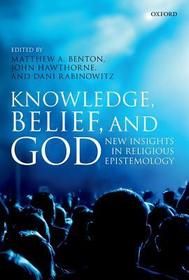
Knowledge, Belief, and God
New Insights in Religious Epistemology
-
10% KEDVEZMÉNY?
- A kedvezmény csak az 'Értesítés a kedvenc témákról' hírlevelünk címzettjeinek rendeléseire érvényes.
- Kiadói listaár GBP 88.00
-
39 732 Ft (37 840 Ft + 5% áfa)
Az ár azért becsült, mert a rendelés pillanatában nem lehet pontosan tudni, hogy a beérkezéskor milyen lesz a forint árfolyama az adott termék eredeti devizájához képest. Ha a forint romlana, kissé többet, ha javulna, kissé kevesebbet kell majd fizetnie.
- Kedvezmény(ek) 10% (cc. 3 973 Ft off)
- Kedvezményes ár 35 759 Ft (34 056 Ft + 5% áfa)
Iratkozzon fel most és részesüljön kedvezőbb árainkból!
Feliratkozom
39 732 Ft

Beszerezhetőség
Megrendelésre a kiadó utánnyomja a könyvet. Rendelhető, de a szokásosnál kicsit lassabban érkezik meg.
Why don't you give exact delivery time?
A beszerzés időigényét az eddigi tapasztalatokra alapozva adjuk meg. Azért becsült, mert a terméket külföldről hozzuk be, így a kiadó kiszolgálásának pillanatnyi gyorsaságától is függ. A megadottnál gyorsabb és lassabb szállítás is elképzelhető, de mindent megteszünk, hogy Ön a lehető leghamarabb jusson hozzá a termékhez.
A termék adatai:
- Kiadó OUP Oxford
- Megjelenés dátuma 2018. február 22.
- ISBN 9780198798705
- Kötéstípus Keménykötés
- Terjedelem356 oldal
- Méret 241x163x28 mm
- Súly 702 g
- Nyelv angol 0
Kategóriák
Rövid leírás:
Epistemology has flourished in this millennium, with new ideas and approaches of many kinds: Knowledge, Belief, and God shows how these developments can illuminate the philosophy of religion and analytic theology. And philosophy of religion is shown to be a valuable testing-ground for epistemology.
TöbbHosszú leírás:
Recent decades have seen a fertile period of theorizing within mainstream epistemology which has had a dramatic impact on how epistemology is done. Investigations into contextualist and pragmatic dimensions of knowledge suggest radically new ways of meeting skeptical challenges and of understanding the relation between the epistemological and practical environment. New insights from social epistemology and formal epistemology about defeat, testimony, a priority, probability, and the nature of evidence all have a potentially revolutionary effect on how we understand our epistemological place in the world. Religion is the place where such rethinking can potentially have its deepest impact and importance. Yet there has been surprisingly little infiltration of these new ideas into philosophy of religion and the epistemology of religious belief.
Knowledge, Belief, and God incorporates these myriad new developments in mainstream epistemology, and extends these developments to questions and arguments in religious epistemology. The investigations proposed in this volume offer substantial new life, breadth, and sophistication to issues in the philosophy of religion and analytic theology. They pose original questions and shed new light on long-standing issues in religious epistemology; and these developments will in turn generate contributions to epistemology itself, since religious belief provides a vital testing ground for recent epistemological ideas.
an overall very high standard of ... contributions ... a fascinating field of discussion beyond the familiar or even well-trodden paths of the continentental tradition and reformed epistemology.
Tartalomjegyzék:
Introduction
I. Historical
Hume, Defeat, and Miracle Reports
Testimony, Error, and Reasonable Belief in Medieval Religious Epistemology
Duns Scotus' Epistemic Argument against Divine Illumination
Knowledge and the Cathartic Value of Repentance
II. Formal
Infinite Cardinalities, Measuring Knowledge, and Probabilities in Fine-Tuning Arguments
A Theological Critique of the Fine-Tuning Argument
Fine-Tuning Fine-Tuning
Reasoning with Plenitude
III. Social
Testimony Amidst Diversity
Testimonial Pessimism
Experts and Peer Disagreement
Know How and Acts of Faith
IV. Rational
Pragmatic Encroachment and Theistic Knowledge
Delusions of Knowledge Concerning God's Existence: A Skeptical Look at Religious Experience
Moderate Modal Skepticism
Phenomenal Conservatism and Religious Experience

