

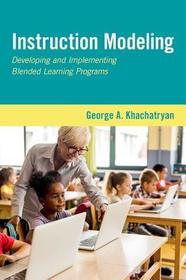
Instruction Modeling
Developing and Implementing Blended Learning Programs
-
10% KEDVEZMÉNY?
- A kedvezmény csak az 'Értesítés a kedvenc témákról' hírlevelünk címzettjeinek rendeléseire érvényes.
- Kiadói listaár GBP 44.49
-
21 255 Ft (20 242 Ft + 5% áfa)
Az ár azért becsült, mert a rendelés pillanatában nem lehet pontosan tudni, hogy a beérkezéskor milyen lesz a forint árfolyama az adott termék eredeti devizájához képest. Ha a forint romlana, kissé többet, ha javulna, kissé kevesebbet kell majd fizetnie.
- Kedvezmény(ek) 10% (cc. 2 126 Ft off)
- Kedvezményes ár 19 129 Ft (18 218 Ft + 5% áfa)
Iratkozzon fel most és részesüljön kedvezőbb árainkból!
Feliratkozom
21 255 Ft

Beszerezhetőség
Becsült beszerzési idő: Várható beérkezés: 2026. január vége.
A Prosperónál jelenleg nincsen raktáron.
Why don't you give exact delivery time?
A beszerzés időigényét az eddigi tapasztalatokra alapozva adjuk meg. Azért becsült, mert a terméket külföldről hozzuk be, így a kiadó kiszolgálásának pillanatnyi gyorsaságától is függ. A megadottnál gyorsabb és lassabb szállítás is elképzelhető, de mindent megteszünk, hogy Ön a lehető leghamarabb jusson hozzá a termékhez.
A termék adatai:
- Kiadó OUP USA
- Megjelenés dátuma 2020. március 27.
- ISBN 9780190910709
- Kötéstípus Puhakötés
- Terjedelem288 oldal
- Méret 155x234x20 mm
- Súly 499 g
- Nyelv angol 48
Kategóriák
Rövid leírás:
"Instruction modeling" is a leading method for designing blended learning programs: carefully study high-quality offline instruction and create online programs to recreate it on a larger scale. Instruction Modeling is both a practical guide to developing and implementing blended learning programs, and a first-hand account of the creation of one such program, Reasoning Mind.
TöbbHosszú leírás:
"Blended learning" is an educational approach that combines online and face-to-face components in the classroom, and it is becoming popular in American schools. But the quality of these programs is inconsistent; some are based on scientific findings on how children learn, while others lack such support. In fact, very little reliable information is currently available on how to create, use, and measure the results of blended learning programs.
Instruction Modeling is both a practical guide to developing and implementing blended learning programs and a first-hand account of the creation of one such program, Reasoning Mind. As Reasoning Mind cofounder and instructional designer George Khachatryan explains, instruction modeling is a leading method for designing blended learning programs: carefully study high-quality offline instruction and build online programs to recreate it on a larger scale. This book describes in practical terms how to create a blended learning program, exploring a wide range of scientifically-supported approaches. Some programs draw on cognitive psychology, for instance, others on research in gaming, and still others on modern statistical methods such as "big data." Instruction modeling is unique amongst these approaches in that it relies above all on a deep understanding of the techniques and qualities of the world's best teachers. Making a strong case for broader use of instruction modeling, this book will be of special interest to teachers and education researchers, and an indispensable resource for those interested in the technique for its application in new contexts.
Tartalomjegyzék:
Foreword
Introduction: Grandmothers and Machines
Chapter 1. Good Instruction...What Is It Anyways?
Chapter 2. Good Instruction in Mathematics
Chapter 3. The Beginnings of Instruction Modeling
Chapter 4. In Which the Rubber Meets the Road
Chapter 5. Refining the Method
Chapter 6. The Case for Instruction Modeling
Chapter 7. A Comparison with Other Approaches
Chapter 8. How to Conduct Instruction Modeling
Chapter 9. The Future of Instruction Modeling
Conclusion: What of It?
Notes
References
About the Author

