

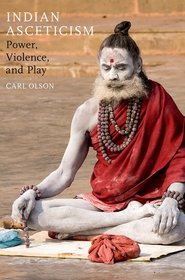
Indian Asceticism
Power, Violence, and Play
-
10% KEDVEZMÉNY?
- A kedvezmény csak az 'Értesítés a kedvenc témákról' hírlevelünk címzettjeinek rendeléseire érvényes.
- Kiadói listaár GBP 38.99
-
17 603 Ft (16 765 Ft + 5% áfa)
Az ár azért becsült, mert a rendelés pillanatában nem lehet pontosan tudni, hogy a beérkezéskor milyen lesz a forint árfolyama az adott termék eredeti devizájához képest. Ha a forint romlana, kissé többet, ha javulna, kissé kevesebbet kell majd fizetnie.
- Kedvezmény(ek) 10% (cc. 1 760 Ft off)
- Kedvezményes ár 15 843 Ft (15 089 Ft + 5% áfa)
Iratkozzon fel most és részesüljön kedvezőbb árainkból!
Feliratkozom
17 603 Ft

Beszerezhetőség
Megrendelésre a kiadó utánnyomja a könyvet. Rendelhető, de a szokásosnál kicsit lassabban érkezik meg.
Why don't you give exact delivery time?
A beszerzés időigényét az eddigi tapasztalatokra alapozva adjuk meg. Azért becsült, mert a terméket külföldről hozzuk be, így a kiadó kiszolgálásának pillanatnyi gyorsaságától is függ. A megadottnál gyorsabb és lassabb szállítás is elképzelhető, de mindent megteszünk, hogy Ön a lehető leghamarabb jusson hozzá a termékhez.
A termék adatai:
- Kiadó OUP USA
- Megjelenés dátuma 2015. április 2.
- ISBN 9780190225322
- Kötéstípus Puhakötés
- Terjedelem304 oldal
- Méret 234x155x25 mm
- Súly 590 g
- Nyelv angol 0
Kategóriák
Rövid leírás:
Using religio-philosophical discourses and narratives from epic, puranic, and hagiographical literature, Indian Asceticism focuses on the powers exhibited by ascetics of India from ancient to modern time.
TöbbHosszú leírás:
Throughout the history of Indian religions, the ascetic figure is most closely identified with power. Power is a by-product of the ascetic path, and is displayed in the ability to fly, walk on water or through dense objects, read minds, discern the former lives of others, see into the future, harm others, or simply levitate one's body. Using religio-philosophical discourses and narratives from epic, puranic, and hagiographical literature, Indian Asceticism focuses on the powers exhibited by ascetics of India from ancient to modern time.
The discourses and narratives show ascetics performing violent acts and using language to curse and harm opponents. They also give rise to questions about how power and violence are related to the phenomenon of play. Olson discusses the erotic, the demonic, the comic, and the miraculous forms of play and their connections to power and violence. His focus is on Hinduism, from early Indian religious history to more modern times, but evidence is also presented from both Buddhism and Jainism, which provides evidence that the subject matter of this book pervades India's major indigenous religious traditions.
The book also includes a look at the extent to which contemporary findings in cognitive science can add to our understanding about these various powers; Olson argues that violence is built into the practice of the ascetic. Indian Asceticism culminates with an attempt to rethink the nature of power in a way that does justice to the literary evidence from Hindu, Buddhist, and Jain sources.
In this interesting book Professor Olson discusses how asceticism is at the heart of Indian religions, offering forms of practice for the attainment of supernatural powers and spiritual liberation. Not only is this a fascinating account of asceticism in Buddhism, Jainism and Hinduism, it relates these practices to contemporary debate in the human sciences such as about the role of cognition in cultural practice. This clearly written book will be invaluable to students of Indian religions and asceticism.
Tartalomjegyzék:
Preface
List of Book Abbreviations
Chapter 1 Introduction
Chapter 2 The Banyan Tree of Indian Asceticism
Chapter 3 Types of Power
Chapter 4 Violence, the Demonic, and Power
Chapter 5 Language and Power
Chapter 6 Ludic Elements: Eroticism, Comic, and Power
Chapter 7 Play, Miracles, and Power
Chapter 8 Power and Theory
Bibliography
Index

