

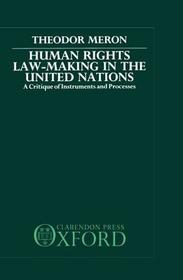
Human Rights Law-Making in the United Nations
A Critique of Instruments and Process
-
10% KEDVEZMÉNY?
- A kedvezmény csak az 'Értesítés a kedvenc témákról' hírlevelünk címzettjeinek rendeléseire érvényes.
- Kiadói listaár GBP 135.00
-
60 952 Ft (58 050 Ft + 5% áfa)
Az ár azért becsült, mert a rendelés pillanatában nem lehet pontosan tudni, hogy a beérkezéskor milyen lesz a forint árfolyama az adott termék eredeti devizájához képest. Ha a forint romlana, kissé többet, ha javulna, kissé kevesebbet kell majd fizetnie.
- Kedvezmény(ek) 10% (cc. 6 095 Ft off)
- Kedvezményes ár 54 857 Ft (52 245 Ft + 5% áfa)
Iratkozzon fel most és részesüljön kedvezőbb árainkból!
Feliratkozom
60 952 Ft

Beszerezhetőség
Megrendelésre a kiadó utánnyomja a könyvet. Rendelhető, de a szokásosnál kicsit lassabban érkezik meg.
Why don't you give exact delivery time?
A beszerzés időigényét az eddigi tapasztalatokra alapozva adjuk meg. Azért becsült, mert a terméket külföldről hozzuk be, így a kiadó kiszolgálásának pillanatnyi gyorsaságától is függ. A megadottnál gyorsabb és lassabb szállítás is elképzelhető, de mindent megteszünk, hogy Ön a lehető leghamarabb jusson hozzá a termékhez.
A termék adatai:
- Kiadó OUP Oxford
- Megjelenés dátuma 1986. december 11.
- ISBN 9780198255499
- Kötéstípus Keménykötés
- Terjedelem368 oldal
- Méret 222x145x28 mm
- Súly 548 g
- Nyelv angol 0
Kategóriák
Rövid leírás:
This book is an examination and critique of the methods employed by the United Nations in adopting human rights instruments. The author concludes that the present system of law-making is inadequate and points to many examples of unclear provisions and of overlap and conflict within a single instrument or between instruments.
TöbbHosszú leírás:
This book is an examination and critique of the methods employed by the United Nations in adopting human rights instruments. Three of the major instruments - the International Convention on the Elimination of All Forms of Racial Discrimination, the Convention on the Elimination of All Forms of Discrimination Against Women, and the International Convention on Civil and Political Rights - are selected for detailed study. The author concludes that the present system of law-making is inadequate and points to many examples of unclear provisions and of overlap and conflict within a single instrument or between instruments. In order that this important function of the organized international community, that of protecting human rights, can work effectively, improvements in law-making techniques are necessary, and Professor Meron concludes with some suggestions for reforms both of the institutions and of the process itself.
Több
