

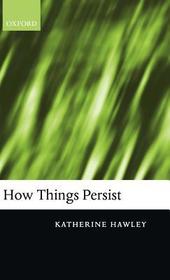
How Things Persist
-
10% KEDVEZMÉNY?
- A kedvezmény csak az 'Értesítés a kedvenc témákról' hírlevelünk címzettjeinek rendeléseire érvényes.
- Kiadói listaár GBP 125.00
-
56 437 Ft (53 750 Ft + 5% áfa)
Az ár azért becsült, mert a rendelés pillanatában nem lehet pontosan tudni, hogy a beérkezéskor milyen lesz a forint árfolyama az adott termék eredeti devizájához képest. Ha a forint romlana, kissé többet, ha javulna, kissé kevesebbet kell majd fizetnie.
- Kedvezmény(ek) 10% (cc. 5 644 Ft off)
- Kedvezményes ár 50 794 Ft (48 375 Ft + 5% áfa)
Iratkozzon fel most és részesüljön kedvezőbb árainkból!
Feliratkozom
56 437 Ft

Beszerezhetőség
Megrendelésre a kiadó utánnyomja a könyvet. Rendelhető, de a szokásosnál kicsit lassabban érkezik meg.
Why don't you give exact delivery time?
A beszerzés időigényét az eddigi tapasztalatokra alapozva adjuk meg. Azért becsült, mert a terméket külföldről hozzuk be, így a kiadó kiszolgálásának pillanatnyi gyorsaságától is függ. A megadottnál gyorsabb és lassabb szállítás is elképzelhető, de mindent megteszünk, hogy Ön a lehető leghamarabb jusson hozzá a termékhez.
A termék adatai:
- Kiadó OUP Oxford
- Megjelenés dátuma 2002. január 3.
- ISBN 9780199249138
- Kötéstípus Keménykötés
- Terjedelem232 oldal
- Méret 224x146x17 mm
- Súly 427 g
- Nyelv angol 0
Kategóriák
Rövid leírás:
The world is remarkably stable -- amidst the flux, physical objects continue to persist. But how do things persist? Are they spread out through time as they are spread out through space? Or is persistence very different from spatial extension? These ancient metaphysical questions are at the forefront of contemporary debate once more. Katherine Hawley provides a wide-ranging yet accessible study of this key issue. She also makes a major contribution to current debates about change, vagueness, and language.
TöbbHosszú leírás:
How do things persist? Are material objects spread out through time just as they are spread out through space? Or is temporal persistence quite different from spatial extension? This key question lies at the heart of any metaphysical exploration of the material world, and it plays a crucial part in debates about personal identity and survival. Katherine Hawley explores and compares three theories of persistence -- endurance, perdurance, and stage theories - investigating the ways in which they attempt to account for the world around us. Having provided valuable clarification of its two main rivals, she concludes by advocating stage theory.
Such a basic issue about the nature of the physical world naturally has close ties with other central philosophical problems. How Things Persist includes discussions of change and parthood, of how we refer to material objects at different times, of the doctrine of Humean supervenience, and of the modal features of material things. In particular, it contains new accounts of the nature of worldly vagueness, and of what binds material things together over time, distinguishing the career of a natural object from an arbitrary sequence of events. Each chapter concludes with a reflection about the impact of these metaphysical debates upon questions about our personal identity and survival.
Both students and professional philosophers will find that this wide-ranging study provides ideal access to the lively modern debate about an ancient metaphysical problem.
How Things Persist is a careful and clever defence of stage theory ... the book is not only a worthy defence of a novel ontology, it is also an instructive survey of the metaphysics of material objects in general and the philosophy of persistence in particular.
Tartalomjegyzék:
Introduction
Sameness and Difference
Parts and Stages
Sticking Stages Together
Vagueness
Sheer Coincidence?
Modality
Epilogue
Bibliography, Index

