

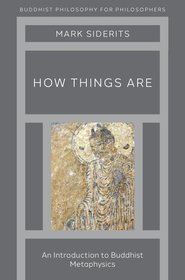
How Things Are
An Introduction to Buddhist Metaphysics
Sorozatcím: Buddhist Philosophy For Philosophers;
-
10% KEDVEZMÉNY?
- A kedvezmény csak az 'Értesítés a kedvenc témákról' hírlevelünk címzettjeinek rendeléseire érvényes.
- Kiadói listaár GBP 25.99
-
11 734 Ft (11 175 Ft + 5% áfa)
Az ár azért becsült, mert a rendelés pillanatában nem lehet pontosan tudni, hogy a beérkezéskor milyen lesz a forint árfolyama az adott termék eredeti devizájához képest. Ha a forint romlana, kissé többet, ha javulna, kissé kevesebbet kell majd fizetnie.
- Kedvezmény(ek) 10% (cc. 1 173 Ft off)
- Kedvezményes ár 10 560 Ft (10 058 Ft + 5% áfa)
Iratkozzon fel most és részesüljön kedvezőbb árainkból!
Feliratkozom
11 734 Ft

Beszerezhetőség
Megrendelésre a kiadó utánnyomja a könyvet. Rendelhető, de a szokásosnál kicsit lassabban érkezik meg.
Why don't you give exact delivery time?
A beszerzés időigényét az eddigi tapasztalatokra alapozva adjuk meg. Azért becsült, mert a terméket külföldről hozzuk be, így a kiadó kiszolgálásának pillanatnyi gyorsaságától is függ. A megadottnál gyorsabb és lassabb szállítás is elképzelhető, de mindent megteszünk, hogy Ön a lehető leghamarabb jusson hozzá a termékhez.
A termék adatai:
- Kiadó OUP USA
- Megjelenés dátuma 2022. március 31.
- ISBN 9780197606919
- Kötéstípus Puhakötés
- Terjedelem212 oldal
- Méret 235x158x15 mm
- Súly 327 g
- Nyelv angol 192
Kategóriák
Rövid leírás:
It is widely known that Buddhists deny the existence of the self. However, Buddhist philosophers defend interesting positions on a variety of other issues of fundamental ontology. In particular, they have important things to say about ontological reduction, and about the nature of the causal relation. Amidst the prolonged debate over global anti-realism, Buddhist philosophers devised an innovative approach to the radical nominalist denial of all universals and real resemblances. While some defend presentism, others propound eternalism. In How Things Are, Mark Siderits presents the arguments that Buddhist philosophers developed on these and other issues.
TöbbHosszú leírás:
It is widely known that Buddhists deny the existence of the self. However, Buddhist philosophers defend interesting positions on a variety of other issues in fundamental ontology. In particular, they have important things to say about ontological reduction and the nature of the causal relation. Amidst the prolonged debate over global anti-realism, Buddhist philosophers devised an innovative approach to the radical nominalist denial of all universals and real resemblances. While some defend presentism, others propound eternalism. In How Things Are, Mark Siderits presents the arguments that Buddhist philosophers developed on these and other issues. Those with an interest in metaphysics may find new and interesting insights into what the Buddhists had to say about their ideas.
This work is designed to introduce some of the more important fruits of Buddhist metaphysical inquiry to philosophers with little or no prior knowledge of that tradition. While there is plenty of scholarship on the Indian Buddhist philosophical tradition, it is primarily concerned with the historical details, often presupposes background knowledge of the major schools and figures, and makes ample use of untranslated Sanskrit technical terms. What has been missing from this area of philosophical inquiry, are studies that make the Buddhist tradition accessible to philosophers who are interested in solving metaphysical problems. This work fills that gap by focusing not on history and texts but on the metaphysical puzzles themselves, and on ways of trying to solve them.
This book provides a multidimensional interpretation of the metaphysical teachings put forth by different schools of Indian Buddhism. It will not only be greatly appreciated by scholars of Indian Buddhist studies,but it also makes an important contribution to the study of metaphysical theories in general.
Tartalomjegyzék:
Chapter 1: Introduction
Chapter 2: Non-Self I
Chapter 3: Non-Self II
Chapter 4: Fundamental Ontology
Chapter 5: Causation
Chapter 6: Buddhist Nominalism
Chapter 7: Time
Chapter 8: The External World
Chapter 9: The Internal World
Chapter 10: Anti-realisms Local and Global
References

