

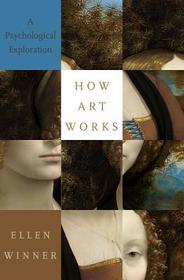
How Art Works
A Psychological Exploration
-
10% KEDVEZMÉNY?
- A kedvezmény csak az 'Értesítés a kedvenc témákról' hírlevelünk címzettjeinek rendeléseire érvényes.
- Kiadói listaár GBP 30.99
-
13 991 Ft (13 325 Ft + 5% áfa)
Az ár azért becsült, mert a rendelés pillanatában nem lehet pontosan tudni, hogy a beérkezéskor milyen lesz a forint árfolyama az adott termék eredeti devizájához képest. Ha a forint romlana, kissé többet, ha javulna, kissé kevesebbet kell majd fizetnie.
- Kedvezmény(ek) 10% (cc. 1 399 Ft off)
- Kedvezményes ár 12 592 Ft (11 993 Ft + 5% áfa)
Iratkozzon fel most és részesüljön kedvezőbb árainkból!
Feliratkozom
13 991 Ft

Beszerezhetőség
Megrendelésre a kiadó utánnyomja a könyvet. Rendelhető, de a szokásosnál kicsit lassabban érkezik meg.
Why don't you give exact delivery time?
A beszerzés időigényét az eddigi tapasztalatokra alapozva adjuk meg. Azért becsült, mert a terméket külföldről hozzuk be, így a kiadó kiszolgálásának pillanatnyi gyorsaságától is függ. A megadottnál gyorsabb és lassabb szállítás is elképzelhető, de mindent megteszünk, hogy Ön a lehető leghamarabb jusson hozzá a termékhez.
A termék adatai:
- Kiadó OUP USA
- Megjelenés dátuma 2018. november 29.
- ISBN 9780190863357
- Kötéstípus Keménykötés
- Terjedelem320 oldal
- Méret 241x163x25 mm
- Súly 680 g
- Nyelv angol 0
Kategóriák
Rövid leírás:
This book examines puzzles about the arts wherever their provenance - as long as there is empirical research using the methods of social science (interviews, experimentation, data collection, statistical analysis) that can shed light on these questions. The examined research reveals how ordinary people think about these questions, and why they think the way they do - an inquiry referred to as intuitive aesthetics. The book shows how psychological research on the arts has shed light on and often offered surprising answers to such questions.
TöbbHosszú leírás:
There is no end of talk and of wondering about 'art' and 'the arts.' This book examines a number of questions about the arts (broadly defined to include all of the arts). Some of these questions come from philosophy. Examples include:
· What makes something art?
· Can anything be art?
· Do we experience "real" emotions from the arts?
· Why do we seek out and even cherish sorrow and fear from art when we go out of our way to avoid these very emotions in real life?
· How do we decide what is good art? Do aesthetic judgments have any objective truth value?
· Why do we devalue fakes even if we -- indeed, even the experts--- can't tell them apart from originals?
· Does fiction enhance our empathy and understanding of others? Is art-making therapeutic?
Others are "common sense" questions that laypersons wonder about. Examples include:
· Does learning to play music raise a child's IQ?
· Is modern art something my kid could do?
· Is talent a matter of nature or nurture?
This book examines puzzles about the arts wherever their provenance - as long as there is empirical research using the methods of social science (interviews, experimentation, data collection, statistical analysis) that can shed light on these questions. The examined research reveals how ordinary people think about these questions, and why they think the way they do - an inquiry referred to as intuitive aesthetics. The book shows how psychological research on the arts has shed light on and often offered surprising answers to such questions.
This shift from philosophical analysis to a robust empirical approach of experiment and observation is the starting point of this book, which is a fascinating account of social scientists' investigations of art through interviews, experiments, data collection, and statistical analysis. Winner touches on a variety of topics ranging from music and emotion, fiction and empathy, the Mozart effect, and perfect fakes and forgeries, to Hockney's theory of optical aids, effort bias, artistic prodigies, deliberate practice and talent, and our curious enjoyment of negative emotions. Recommended for all readers.
Tartalomjegyzék:
Table of Contents
Acknowledgments
I. INTRODUCTION
1. Perennial Questions
2. Can This Be Art?
II. ART AND EMOTION
3. Wordless Sounds: Hearing Emotion in Music
4. Feeling Like Crying: Emotions in the Music Listener
5. Color and Form: Emotional Connotations of Visual Art
6. Emotions in the Art Museum: Why Don't We Feel Like Crying?
7. Drawn to Pain: The Paradoxical Enjoyment of Negative Emotion in Art
III. ART AND JUDGMENT
8. Is It Good-Or Just Familiar?
9. Too Easy to Be Good? The Effort Bias
10. Identical! What's Wrong with a Perfect Fake?
11. "But My Kid Could Have Done That!"
IV. WHAT ART DOES - AND DOES NOT - DO FOR US
12. Silver Bullets: Does Art Make Us Smarter?
13. The Lives of Others: Fiction and Empathy
14. Does Making Art Improve Well-Being?
V. MAKING ART
15. Who Makes Art and Why?
VI. CONCLUSION
16. How Art Works
Notes
References
Index

