

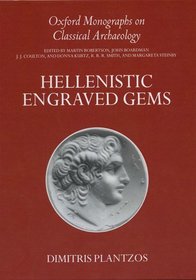
Hellenistic Engraved Gems
Sorozatcím: Oxford Monographs on Classical Archaeology;
-
10% KEDVEZMÉNY?
- A kedvezmény csak az 'Értesítés a kedvenc témákról' hírlevelünk címzettjeinek rendeléseire érvényes.
- Kiadói listaár GBP 327.50
-
147 866 Ft (140 825 Ft + 5% áfa)
Az ár azért becsült, mert a rendelés pillanatában nem lehet pontosan tudni, hogy a beérkezéskor milyen lesz a forint árfolyama az adott termék eredeti devizájához képest. Ha a forint romlana, kissé többet, ha javulna, kissé kevesebbet kell majd fizetnie.
- Kedvezmény(ek) 10% (cc. 14 787 Ft off)
- Kedvezményes ár 133 080 Ft (126 743 Ft + 5% áfa)
Iratkozzon fel most és részesüljön kedvezőbb árainkból!
Feliratkozom
147 866 Ft

Beszerezhetőség
Megrendelésre a kiadó utánnyomja a könyvet. Rendelhető, de a szokásosnál kicsit lassabban érkezik meg.
Why don't you give exact delivery time?
A beszerzés időigényét az eddigi tapasztalatokra alapozva adjuk meg. Azért becsült, mert a terméket külföldről hozzuk be, így a kiadó kiszolgálásának pillanatnyi gyorsaságától is függ. A megadottnál gyorsabb és lassabb szállítás is elképzelhető, de mindent megteszünk, hogy Ön a lehető leghamarabb jusson hozzá a termékhez.
A termék adatai:
- Kiadó Clarendon Press
- Megjelenés dátuma 1999. július 8.
- ISBN 9780198150374
- Kötéstípus Keménykötés
- Terjedelem260 oldal
- Méret 285x226x19 mm
- Súly 875 g
- Nyelv angol
- Illusztrációk 96 plates 0
Kategóriák
Rövid leírás:
This volume follows the development of Greek gem engraving from Alexander to Augustus. Hellenistic gems are studied in their archaeological context with an assessment of the evidence of their use, significance, and value. The book focuses on subject-matter, technique, and style, as well as problems of chronology and distribution.
TöbbHosszú leírás:
Engraved gems were used by the Greeks as seals and amulets, but were primarily valued as ornaments. Their iconography was drawn from a wide range of motifs and standard devices current in other art forms. In the Hellenistic period gem cutters remained faithful to the classical tradition, but were able to develop new subjects and styles. Portraits, especially of royalty, became the commonest subject in glyptic after Alexander, a practice that continued through the Roman period and was still popular with patrons and artists of the Renaissance and even later.
This volume follows the development of gem engraving from Alexander's conquest of the East to the Augustan period. Hellenistic gems are studied in their archaeological and historical context: evidence on their use, significance, and value; questions of technique and style; and problems of chronology and distribution. Special sections have been devoted to patronage of gem-engravers and the relationship of gem-cutting with other miniaturist arts and coinage.
provides much of interest both to gem specialists and to those with a more general interest in Hellenistic art and culture.

