

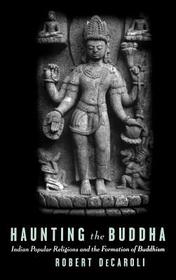
Haunting the Buddha
Indian Popular Religions and the Formation of Buddhism
-
10% KEDVEZMÉNY?
- A kedvezmény csak az 'Értesítés a kedvenc témákról' hírlevelünk címzettjeinek rendeléseire érvényes.
- Kiadói listaár GBP 76.00
-
34 314 Ft (32 680 Ft + 5% áfa)
Az ár azért becsült, mert a rendelés pillanatában nem lehet pontosan tudni, hogy a beérkezéskor milyen lesz a forint árfolyama az adott termék eredeti devizájához képest. Ha a forint romlana, kissé többet, ha javulna, kissé kevesebbet kell majd fizetnie.
- Kedvezmény(ek) 10% (cc. 3 431 Ft off)
- Kedvezményes ár 30 883 Ft (29 412 Ft + 5% áfa)
Iratkozzon fel most és részesüljön kedvezőbb árainkból!
Feliratkozom
34 314 Ft

Beszerezhetőség
Megrendelésre a kiadó utánnyomja a könyvet. Rendelhető, de a szokásosnál kicsit lassabban érkezik meg.
Why don't you give exact delivery time?
A beszerzés időigényét az eddigi tapasztalatokra alapozva adjuk meg. Azért becsült, mert a terméket külföldről hozzuk be, így a kiadó kiszolgálásának pillanatnyi gyorsaságától is függ. A megadottnál gyorsabb és lassabb szállítás is elképzelhető, de mindent megteszünk, hogy Ön a lehető leghamarabb jusson hozzá a termékhez.
A termék adatai:
- Kiadó OUP USA
- Megjelenés dátuma 2004. október 28.
- ISBN 9780195168389
- Kötéstípus Keménykötés
- Terjedelem240 oldal
- Méret 229x152x17 mm
- Súly 526 g
- Nyelv angol
- Illusztrációk numerous halftones 0
Kategóriák
Rövid leírás:
Drawing on fieldwork, textual, and iconographic evidence, DeCaroli offers a comprehensive view of early Indian spirit - religions and their contributions to Buddhism - the first attempt at such a study since Ananda Coomaraswamy's pioneering work was published in 1928. The result is an important contribution to our understanding of early Indian religion and society, and will be of interest to those in the fields of Buddhist studies, Asian history, art history, and anthropology.
TöbbHosszú leírás:
Early European histories of India frequently reflected colonialist agendas. The idea that Indian society had declined from an earlier Golden Age helped justify the colonial presence. It was said, for example, that modern Buddhism had fallen away from its original identity as a purely rational philosophy that arose in the mythical 5th-century BCE Golden Age unsullied by the religious and cultural practices that surrounded it. In this book Robert DeCaroli seeks to place the formation of Buddhism in its appropriate social and political contexts. It is necessary, he says, to acknowledge that the monks and nuns who embodied early Buddhist ideals shared many beliefs held by the communities in which they were raised. In becoming members of the monastic society these individuals did not abandon their beliefs in the efficacy and the dangers represented by minor deities and spirits of the dead. Their new faith, however, gave them revolutionary new mechanisms with which to engage those supernatural beings. Drawing on fieldwork, textual, and iconographic evidence, DeCaroli offers a comprehensive view of early Indian spirit-religions and their contributions to Buddhism-the first attempt at such a study since Ananda Coomaraswamy's pioneering work was published in 1928. The result is an important contribution to our understanding of early Indian religion and society, and will be of interest to those in the fields of Buddhist studies, Asian history, art history, and anthropology.
This is a bold little book that pushes around some very big problems, and it does what it says it will do: it reopens the question of the relationship between what we call Buddhism and the world of 'spirits' that appears always to have surrounded it.

