

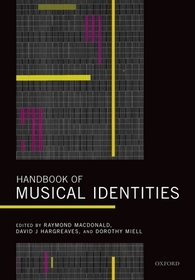
Handbook of Musical Identities
-
20% KEDVEZMÉNY?
- A kedvezmény csak az 'Értesítés a kedvenc témákról' hírlevelünk címzettjeinek rendeléseire érvényes.
- Kiadói listaár GBP 157.50
-
71 111 Ft (67 725 Ft + 5% áfa)
Az ár azért becsült, mert a rendelés pillanatában nem lehet pontosan tudni, hogy a beérkezéskor milyen lesz a forint árfolyama az adott termék eredeti devizájához képest. Ha a forint romlana, kissé többet, ha javulna, kissé kevesebbet kell majd fizetnie.
- Kedvezmény(ek) 20% (cc. 14 222 Ft off)
- Kedvezményes ár 56 889 Ft (54 180 Ft + 5% áfa)
- A kedvezmény érvényes eddig: 2026. június 30.
Iratkozzon fel most és részesüljön kedvezőbb árainkból!
Feliratkozom
71 111 Ft

Beszerezhetőség
Becsült beszerzési idő: A Prosperónál jelenleg nincsen raktáron, de a kiadónál igen. Beszerzés kb. 3-5 hét..
A Prosperónál jelenleg nincsen raktáron.
Why don't you give exact delivery time?
A beszerzés időigényét az eddigi tapasztalatokra alapozva adjuk meg. Azért becsült, mert a terméket külföldről hozzuk be, így a kiadó kiszolgálásának pillanatnyi gyorsaságától is függ. A megadottnál gyorsabb és lassabb szállítás is elképzelhető, de mindent megteszünk, hogy Ön a lehető leghamarabb jusson hozzá a termékhez.
A termék adatai:
- Kiadó OUP Oxford
- Megjelenés dátuma 2017. február 23.
- ISBN 9780199679485
- Kötéstípus Keménykötés
- Terjedelem896 oldal
- Méret 252x178x54 mm
- Súly 1696 g
- Nyelv angol 0
Kategóriák
Rövid leírás:
The Handbook of Musical Identities explores three features of psychological approaches to musical identities and four real-life contexts in which musical identities have been investigated. The multidisciplinary breadth of the Handbook reflects the changes that are taking place in music, in digital technology, and in their role in society.
TöbbHosszú leírás:
Music is a tremendously powerful channel through which people develop their personal and social identities. Music is used to communicate emotions, thoughts, political statements, social relationships, and physical expressions. But, just as language can mediate the construction and negotiation of developing identities, so music can also be a means of communication through which aspects of people's identities are constructed. Music can have a profound influence on our developing sense of identity, our values, and our beliefs, be it from rock music, classical music, or jazz.
Musical identities (MacDonald, Hargreaves and Miell, 2002) was unique in being in being one of the first books to explore this fascinating topic. This new book documents the remarkable expansion and growth in the study of musical identities since the publication of the earlier work. The editors identify three main features of current psychological approaches to musical identities, which concern their definition, development, and the identification of individual differences, as well as four main real-life contexts in which musical identities have been investigated, namely in music and musical institutions; specific geographical communities; education; and in health and well-being. This conceptual framework provides the rationale for the structure of the Handbook.
The book is divided into seven main sections. The first, 'Sociological, discursive and narrative approaches', includes several general theoretical accounts of musical identities from this perspective, as well as some more specific investigations. The second and third main sections deal in depth with two of the three psychological topics described above, namely the development of and individual differences in musical identities. The fourth, fifth and sixth main sections pursue three of the real-life contexts identified above, namely 'Musical institutions and practitioners', 'Education', and 'Health and well-being'. The seventh and final main section of the Handbook - 'Case studies' - includes chapters which look at particular musical identities in specific times, places, or contexts.
The multidisciplinary range and breadth of the Handbook's contents reflect the rapid changes that are taking place in music, in digital technology, and in their role in society as a whole, such that the study of musical identity is likely to proliferate even further in the future.
...the book raises many interesting hypotheses - always a good thing, as books of facts date quickly, but books of ideas inspire.
Tartalomjegyzék:
Editors' Introduction
The changing identity of musical identities
Sociological, discursive and narrative approaches
Identities and musics: Reclaiming personhood
Music-ecology and everyday action: Creating, changing and contesting identities
Laying the foundations for narrative identities in and through music
Young people's musical lives: Identities, learning ecologies and connectedness
The ear of the beholder: Improvisation, ambiguity and social contexts in the constructions of musical identities
Post-national identities in music: Acting in a global intertextual musical arena
'Will the real Slim Shady please stand up?': Identity in popular music
Development
The musical self: Affections for life in a community of sound
Musical identity, interest, and involvement
Building musical self-identity in early infancy
Processes of musical identity consolidation during adolescence
The moving and movement identities of adolescents: lessons from dance movement psychotherapy in mainstream schools
Individual differences
Musical identities, music preferences, and individual differences
Musical self-concept as a mediating psychological structure: From musical experience to musical identity
Defining the musical identity of 'non-musicians'
The social psychological underpinnings of musical identities: A study on how personality stereotypes are formed from musical cues
Musical identity and individual differences in empathy
Musical institutions and practitioners
Impersonating the music in performance
Performance Identity
Imagining identifications: how musicians align their practices with publics
Patterns of sociohistorical interaction between musical identity and technology
Who am I? : The process of identity renegotiation for opera choristers following redundancy
Reauthoring the self: Therapeutic songwriting in identity work
Staying one step ahead?: The self-identity of Japanese concert promoters
Education
Musical identity, learning and teaching
Identity formation and agency in the diverse music classroom
Music in identity at adolescence across school transition
Children's ethnic identity, cultural diversity, and music education
The identities of singers and their educational environments
Music-games and musical identities
Health and well-being
Music, identity and health
Musical identity in fostering emotional health
Music-making in therapeutic contexts: reframing identity following disruptions to health
Identity and musical development in people with severe or profound and multiple learning difficulties
"I would die without my music ": Relying on musical identities to cope with difficult times
On musical identities, social pharmacology and timing in music therapy
Case studies
The clever boy from Croydon: music, identity, and race
The identities of Sevda - from Graeco-Arabic medicine to music therapy
Musical identities, resilience and wellbeing: The effects of music on displaced children in Colombia
Music of Englishness: National identity and the first folk revival
Sistema Scotland: Emerging musical identities in Raploch
Musical identities in Australia and South Korea and new identities emerging through social media and digital technology
Identity, music, and festivity in Southern Tunisia

