

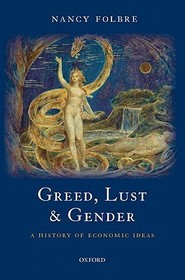
Greed, Lust and Gender
A History of Economic Ideas
-
10% KEDVEZMÉNY?
- A kedvezmény csak az 'Értesítés a kedvenc témákról' hírlevelünk címzettjeinek rendeléseire érvényes.
- Kiadói listaár GBP 91.00
-
41 086 Ft (39 130 Ft + 5% áfa)
Az ár azért becsült, mert a rendelés pillanatában nem lehet pontosan tudni, hogy a beérkezéskor milyen lesz a forint árfolyama az adott termék eredeti devizájához képest. Ha a forint romlana, kissé többet, ha javulna, kissé kevesebbet kell majd fizetnie.
- Kedvezmény(ek) 10% (cc. 4 109 Ft off)
- Kedvezményes ár 36 978 Ft (35 217 Ft + 5% áfa)
Iratkozzon fel most és részesüljön kedvezőbb árainkból!
Feliratkozom
41 086 Ft

Beszerezhetőség
Megrendelésre a kiadó utánnyomja a könyvet. Rendelhető, de a szokásosnál kicsit lassabban érkezik meg.
Why don't you give exact delivery time?
A beszerzés időigényét az eddigi tapasztalatokra alapozva adjuk meg. Azért becsült, mert a terméket külföldről hozzuk be, így a kiadó kiszolgálásának pillanatnyi gyorsaságától is függ. A megadottnál gyorsabb és lassabb szállítás is elképzelhető, de mindent megteszünk, hogy Ön a lehető leghamarabb jusson hozzá a termékhez.
A termék adatai:
- Kiadó OUP Oxford
- Megjelenés dátuma 2009. október 22.
- ISBN 9780199238422
- Kötéstípus Keménykötés
- Terjedelem414 oldal
- Méret 241x160x26 mm
- Súly 754 g
- Nyelv angol 0
Kategóriák
Rövid leírás:
This book dramatizes the history of self-interest by describing a centuries-long debate over greed, lust, and appropriate gender roles in terms that ordinary readers will enjoy. Ranging from the 18th century to the present, it offers a deft and engaging critique of economic history and the history of ideas from a feminist perspective.
TöbbHosszú leírás:
When does the pursuit of self-interest go too far, lapsing into morally unacceptable behaviour? Until the unprecedented events of the recent global financial crisis economists often seemed unconcerned with this question, even suggesting that "greed is good." A closer look, however, suggests that greed and lust are generally considered good only for men, and then only outside the realm of family life. The history of Western economic ideas shows that men have given themselves more cultural permission than women for the pursuit of both economic and sexual self-interest. Feminists have long contested the boundaries of this permission, demanding more than mere freedom to act more like men. Women have gradually gained the power to revise our conceptual and moral maps and to insist on a better-and less gendered-balance between self interest and care for others.
This book brings women's work, their sexuality, and their ideas into the center of the dialectic between economic history and the history of economic ideas. It describes a spiralling process of economic and cultural change in Great Britain, France, and the United States since the 18th century that shaped the evolution of patriarchal capitalism and the larger relationship between production and reproduction. This feminist reinterpretation of our past holds profound implications for today's efforts to develop a more humane and sustainable form of capitalism.
A lively survey of economic thought from the late seventeenth century to the present... A thought-provoking and entertaining read.
Tartalomjegyzék:
Introduction
The Eye of the Needle
The Springs of Desire
Defining Virtues
Free Trade but Not Free Love
The Limits of Affection
The Perfectibility of Man
The Greatest Happiness
Self-Love Triumphant
Production and Reproduction
Whose Wealth?
The Social Family
Equal Opportunities
The Subjection of Women
Declaring Independence
The Icy Waters
The Sacred Sphere
The Unproductive Housewife
The Nanny State
Human Capitalism
Beyond Economic Man
Conclusion

