

-
10% KEDVEZMÉNY?
- A kedvezmény csak az 'Értesítés a kedvenc témákról' hírlevelünk címzettjeinek rendeléseire érvényes.
- Kiadói listaár GBP 172.50
-
77 883 Ft (74 175 Ft + 5% áfa)
Az ár azért becsült, mert a rendelés pillanatában nem lehet pontosan tudni, hogy a beérkezéskor milyen lesz a forint árfolyama az adott termék eredeti devizájához képest. Ha a forint romlana, kissé többet, ha javulna, kissé kevesebbet kell majd fizetnie.
- Kedvezmény(ek) 10% (cc. 7 788 Ft off)
- Kedvezményes ár 70 095 Ft (66 758 Ft + 5% áfa)
Iratkozzon fel most és részesüljön kedvezőbb árainkból!
Feliratkozom
77 883 Ft

Beszerezhetőség
Megrendelésre a kiadó utánnyomja a könyvet. Rendelhető, de a szokásosnál kicsit lassabban érkezik meg.
Why don't you give exact delivery time?
A beszerzés időigényét az eddigi tapasztalatokra alapozva adjuk meg. Azért becsült, mert a terméket külföldről hozzuk be, így a kiadó kiszolgálásának pillanatnyi gyorsaságától is függ. A megadottnál gyorsabb és lassabb szállítás is elképzelhető, de mindent megteszünk, hogy Ön a lehető leghamarabb jusson hozzá a termékhez.
A termék adatai:
- Kiadó OUP Oxford
- Megjelenés dátuma 2002. július 18.
- ISBN 9780199254033
- Kötéstípus Keménykötés
- Terjedelem408 oldal
- Méret 242x163x28 mm
- Súly 712 g
- Nyelv angol
- Illusztrációk numerous figures and tables 0
Kategóriák
Rövid leírás:
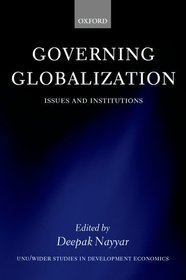
This timely book is the first to examine in depth the governance needs of the world economy and polity. It evaluates the experience of institutions, with a focus on the UN, the IMF, the World Bank, and the WTO, to sketch the contours of reform and change necessary in the existing system. It analyses issues of emerging significance, such as global macroeconomic management, transnational corporations, international capital movements, and cross-border movements of people, to suggest that there are some missing institutions which are needed.
TöbbHosszú leírás:
It is now more than fifty years since the United Nations system and the Bretton Woods institutions were created. The world has changed since then, and so have its governance needs in terms of institutions and rules. It is time to think about the contours of institutions and governance that would meet the needs of the world economy, and also polity, at least for the first quarter of the twenty-first century. This book is the first to examine the subject in depth.
The study is divided into four parts. The first situates the subject in the wider context of globalization which has shaped development in the world economy, affected the living conditions of people, and constrained the role of nation states. The international context and the national setting are explored. The second part analyses some issues of emerging significance in the contemporary world, such as global macroeconomic management, transnational corporations, international capital flows, and cross-border movements of people, to suggest that there are some missing institutions which are needed. The third part provides a critical evaluation of the existing institutions, in retrospect, with a focus on the UN, the IMF, the World Bank, and the WTO. It analyses how existing rules need to be modified or existing institutions need to be restructured to meet the present and future needs of global governance. The fourth part explores some important elements of governance which are critical for any vision of the future. It suggests some changes in existing institutions and points to emerging governance needs where new institutions may have to be created.
This authoritative volume will be of enormous value to readers with an interest in international economics, development economics, and international relations. It will also be of immense value to practitioners, both policy-makers and diplomats, concerned with problems of global governance, and should become the standard reference on the subject.
Tartalomjegyzék:
Part I: Context
Introduction
Nationalism and Economic Policy in the Era of Globalization
Part II: Issues
Global Macroeconomic Management
Transnational Corporations and Technology Flows
Capital Flows to Developing Countries and the Reform of the International Financial System
Cross-Border Movements of People
Part III: Institutions
The United Nations System: Prospects for Renewal
The Bretton Woods Institutions: Evolution, Reform, and Change
Globalization and the Logic of International Collective Action: Re-examining the Bretton Woods Institutions
From GATT to WTO and Beyond
Part IV: Governance
Reforming the International Financial Architecture: Consensus and Divergence
Developing Countries in Global Economi Governance and Negotiation Processes
Processes of Change in International Organizations
The Existing System and the Missing Institutions

