

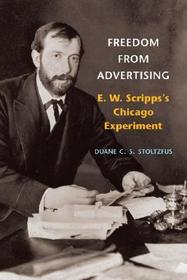
Freedom from Advertising
E. W. Scripps's Chicago Experiment
Sorozatcím: The History of Media and Communication;
-
20% KEDVEZMÉNY?
- A kedvezmény csak az 'Értesítés a kedvenc témákról' hírlevelünk címzettjeinek rendeléseire érvényes.
- Kiadói listaár GBP 42.00
-
18 963 Ft (18 060 Ft + 5% áfa)
Az ár azért becsült, mert a rendelés pillanatában nem lehet pontosan tudni, hogy a beérkezéskor milyen lesz a forint árfolyama az adott termék eredeti devizájához képest. Ha a forint romlana, kissé többet, ha javulna, kissé kevesebbet kell majd fizetnie.
- Kedvezmény(ek) 20% (cc. 3 793 Ft off)
- Kedvezményes ár 15 170 Ft (14 448 Ft + 5% áfa)
- A kedvezmény érvényes eddig: 2026. június 30.
Iratkozzon fel most és részesüljön kedvezőbb árainkból!
Feliratkozom
18 963 Ft

Beszerezhetőség
Becsült beszerzési idő: A Prosperónál jelenleg nincsen raktáron, de a kiadónál igen. Beszerzés kb. 3-5 hét..
A Prosperónál jelenleg nincsen raktáron.
Why don't you give exact delivery time?
A beszerzés időigényét az eddigi tapasztalatokra alapozva adjuk meg. Azért becsült, mert a terméket külföldről hozzuk be, így a kiadó kiszolgálásának pillanatnyi gyorsaságától is függ. A megadottnál gyorsabb és lassabb szállítás is elképzelhető, de mindent megteszünk, hogy Ön a lehető leghamarabb jusson hozzá a termékhez.
A termék adatai:
- Kiadó University of Illinois Press
- Megjelenés dátuma 2007. január 18.
- Kötetek száma Hardback
- ISBN 9780252031151
- Kötéstípus Keménykötés
- Terjedelem208 oldal
- Méret 229x152x23 mm
- Súly 426 g
- Nyelv angol
- Illusztrációk 10 photographs 0
Kategóriák
Hosszú leírás:
Disgusted by publishers and editors who refused to cover important stories for fear of offending advertisers, the press baron E. W. Scripps rejected conventional wisdom and set out to prove that an ad-free newspaper could be profitable entirely on circulation. Duane C. S. Stoltzfus details the history of Scripps’s innovative 1911 experiment, which began in Chicago amid great secrecy. The tabloid-sized newspaper was called the Day Book, and at a penny a copy, it aimed for a working-class market, crusading for higher wages, more unions, safer factories, lower streetcar fares, and women’s right to vote. It also tackled the important stories ignored by most other dailies, like the labor conflicts that shook Chicago in 1912.
Though the Day Book’s financial losses steadily declined over the years, it never became profitable, and publication ended in 1917. Nevertheless, Stoltzfus explains that the Day Book served as an important ally of workers, a keen watchdog on advertisers, and it redefined news by providing an example of a paper that treated its readers first as citizens with rights rather than simply as consumers.
Több
