

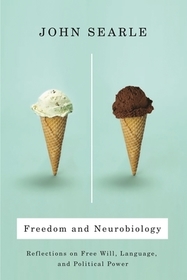
Freedom and Neurobiology
Reflections on Free Will, Language, and Political Power
Sorozatcím: Columbia Themes in Philosophy;
-
10% KEDVEZMÉNY?
- A kedvezmény csak az 'Értesítés a kedvenc témákról' hírlevelünk címzettjeinek rendeléseire érvényes.
- Kiadói listaár GBP 16.99
-
7 670 Ft (7 305 Ft + 5% áfa)
Az ár azért becsült, mert a rendelés pillanatában nem lehet pontosan tudni, hogy a beérkezéskor milyen lesz a forint árfolyama az adott termék eredeti devizájához képest. Ha a forint romlana, kissé többet, ha javulna, kissé kevesebbet kell majd fizetnie.
- Kedvezmény(ek) 10% (cc. 767 Ft off)
- Kedvezményes ár 6 903 Ft (6 575 Ft + 5% áfa)
Iratkozzon fel most és részesüljön kedvezőbb árainkból!
Feliratkozom
7 670 Ft

Beszerezhetőség
Becsült beszerzési idő: A Prosperónál jelenleg nincsen raktáron, de a kiadónál igen. Beszerzés kb. 3-5 hét..
A Prosperónál jelenleg nincsen raktáron.
Why don't you give exact delivery time?
A beszerzés időigényét az eddigi tapasztalatokra alapozva adjuk meg. Azért becsült, mert a terméket külföldről hozzuk be, így a kiadó kiszolgálásának pillanatnyi gyorsaságától is függ. A megadottnál gyorsabb és lassabb szállítás is elképzelhető, de mindent megteszünk, hogy Ön a lehető leghamarabb jusson hozzá a termékhez.
A termék adatai:
- Kiadó Columbia University Press
- Megjelenés dátuma 2008. október 3.
- ISBN 9780231137539
- Kötéstípus Puhakötés
- Terjedelem128 oldal
- Méret 209x139 mm
- Nyelv angol 0
Kategóriák
Rövid leírás:
In Freedom and Neurobiology, John Searle discusses the possibility of free will within the context of contemporary neurobiology. He begins by explaining the relationship between human reality and the more fundamental reality as described by physics and chemistry. Then he proposes a neurobiological resolution to the problem by demonstrating how various conceptions of free will have different consequences for the neurobiology of consciousness.
In the second half of the book, Searle applies his theory of social reality to the problem of political power, explaining the role of language in the formation of our political reality. Searle focuses on the institutional structures that organize, empower, and regulate our lives-money, property, marriage, government-and the way in which language constitutes them. He argues that consciousness and rationality are crucial to our existence and that they are the result of the biological evolution of our species. In conclusion, he addresses the problem of free will within the context of a neurobiological conception of consciousness and rationality, and he addresses the problem of political power within the context of this analysis.
TöbbHosszú leírás:
In Freedom and Neurobiology, John Searle discusses the possibility of free will within the context of contemporary neurobiology. He begins by explaining the relationship between human reality and the more fundamental reality as described by physics and chemistry. Then he proposes a neurobiological resolution to the problem by demonstrating how various conceptions of free will have different consequences for the neurobiology of consciousness.
In the second half of the book, Searle applies his theory of social reality to the problem of political power, explaining the role of language in the formation of our political reality. Searle focuses on the institutional structures that organize, empower, and regulate our lives-money, property, marriage, government-and the way in which language constitutes them. He argues that consciousness and rationality are crucial to our existence and that they are the result of the biological evolution of our species. In conclusion, he addresses the problem of free will within the context of a neurobiological conception of consciousness and rationality, and he addresses the problem of political power within the context of this analysis.
Több
