

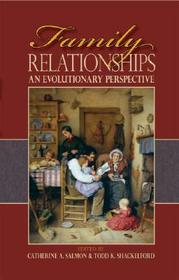
Family Relationships
An evolutionary perspective
-
10% KEDVEZMÉNY?
- A kedvezmény csak az 'Értesítés a kedvenc témákról' hírlevelünk címzettjeinek rendeléseire érvényes.
- Kiadói listaár GBP 58.00
-
26 187 Ft (24 940 Ft + 5% áfa)
Az ár azért becsült, mert a rendelés pillanatában nem lehet pontosan tudni, hogy a beérkezéskor milyen lesz a forint árfolyama az adott termék eredeti devizájához képest. Ha a forint romlana, kissé többet, ha javulna, kissé kevesebbet kell majd fizetnie.
- Kedvezmény(ek) 10% (cc. 2 619 Ft off)
- Kedvezményes ár 23 568 Ft (22 446 Ft + 5% áfa)
Iratkozzon fel most és részesüljön kedvezőbb árainkból!
Feliratkozom
26 187 Ft

Beszerezhetőség
Megrendelésre a kiadó utánnyomja a könyvet. Rendelhető, de a szokásosnál kicsit lassabban érkezik meg.
Why don't you give exact delivery time?
A beszerzés időigényét az eddigi tapasztalatokra alapozva adjuk meg. Azért becsült, mert a terméket külföldről hozzuk be, így a kiadó kiszolgálásának pillanatnyi gyorsaságától is függ. A megadottnál gyorsabb és lassabb szállítás is elképzelhető, de mindent megteszünk, hogy Ön a lehető leghamarabb jusson hozzá a termékhez.
A termék adatai:
- Kiadó OUP USA
- Megjelenés dátuma 2007. szeptember 20.
- ISBN 9780195320510
- Kötéstípus Keménykötés
- Terjedelem376 oldal
- Méret 160x236x25 mm
- Súly 680 g
- Nyelv angol
- Illusztrációk 6 illustrations 0
Kategóriák
Rövid leírás:
In this volume, leading researchers illustrate the ways in which an evolutionary perspective can inform our understanding of family relationships. Humans have evolved specialised mechanisms for processing information and motivating behaviour to deal with the demands of being a mate, parent, sibling, child, or grandparent.
TöbbHosszú leírás:
Kinship ties - the close relationships found within the family - have been a central focus of evolutionary biological analyses of social behaviour ever since biologist William Hamilton extended the concept of Darwinian fitness to include an individual's actions benefiting not only his own offspring, but also collateral kin. Evolutionary biologists consider not only organisms' reproductive strategists, but also nepotistic strategists. If a person's genes are just as likely to be reproduced in her sister as in her daughter, then we should expect the evolution of sororal investment in the same way as one expects maternal investment. This concept has revolutionized biologists' understanding of social interaction and developmental psychologists' understanding of the family. However, kinship ties have largely been ignored in other areas of psychology, particularly social psychology.
Family Relationships brings together leading theorists and researchers from evolutionary psychology and related disciplines to illustrate the ways in which an evolutionary perspective can inform our study and understanding of family relationships. The contributors argue that family psychology is relationship specific: the relationship between mother and daughter is different from that between father and daughter or that between brother and sister or sister and sister. In other words, humans have evolved specialized mechanisms for processing information and motivating behavior that deal with the distinct demands of being a mate, father, mother, sibling, child, or grandparent. Such an evolutionary perspective on family dynamics provides a unique insight into human behaviour.
Tartalomjegyzék:
Part I. Introduction and Overview
Toward an evolutionary psychology of the family
Evolution of the human family: Cooperative males, long social childhoods, smart mothers, and extended kin networks
Evolutionary context of human development: The cooperative breeding model
Part II. Parent-Child Relationships
Life transitions: Becoming a parent
Maternal investment
Evolution of fatherhood
Parent-offspring conflict
Birth order
Part III: Other Family Relationships
Evolutionary perspectives on sibling relationships
Kin detection and the development of sexual aversions: Towards an integration of theories on family sexual abuse
Grandparental and extended kin relationships
Part IV. Applications to Specific Issues
Violence and abuse in families: The consequences of paternal uncertainty
Temperament as a Biological Mechanism for Mate Choice: A hypothesis and preliminary data
Twin research: Evolutionary perspective on social relations
Part V: Conclusions and Future Directions
All in the family: An evolutionary developmental perspective

