

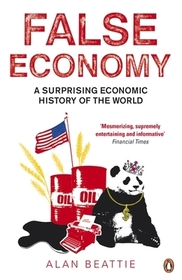
False Economy
A Surprising Economic History of the World
-
20% KEDVEZMÉNY?
- Kiadói listaár GBP 11.99
-
5 413 Ft (5 155 Ft + 5% áfa)
Az ár azért becsült, mert a rendelés pillanatában nem lehet pontosan tudni, hogy a beérkezéskor milyen lesz a forint árfolyama az adott termék eredeti devizájához képest. Ha a forint romlana, kissé többet, ha javulna, kissé kevesebbet kell majd fizetnie.
- Kedvezmény(ek) 20% (cc. 1 083 Ft off)
- Kedvezményes ár 4 330 Ft (4 124 Ft + 5% áfa)
4 330 Ft

Beszerezhetőség
Becsült beszerzési idő: A Prosperónál jelenleg nincsen raktáron, de a kiadónál igen. Beszerzés kb. 3-5 hét..
A Prosperónál jelenleg nincsen raktáron.
Why don't you give exact delivery time?
A beszerzés időigényét az eddigi tapasztalatokra alapozva adjuk meg. Azért becsült, mert a terméket külföldről hozzuk be, így a kiadó kiszolgálásának pillanatnyi gyorsaságától is függ. A megadottnál gyorsabb és lassabb szállítás is elképzelhető, de mindent megteszünk, hogy Ön a lehető leghamarabb jusson hozzá a termékhez.
A termék adatai:
- Kiadó Penguin Books Ltd
- Megjelenés dátuma 2010. június 24.
- Kötetek száma B-format paperback
- ISBN 9780141033709
- Kötéstípus Puhakötés
- Terjedelem336 oldal
- Méret 196x130x22 mm
- Súly 238 g
- Nyelv angol 0
Kategóriák
Hosszú leírás:
*NEW YORK TIMES BESTSELLER*
Why do some countries succeed while others fail? What causes boom or bust? The World Trade Editor of the FT explains how the world really works.
'A thorough examination of economies from the age of empire to the age of the IMF' The Washington Post
Why do oil and diamonds lead to economic disaster more often than boom? Why doesn't Africa grow cocaine? Why might believing in God be good for your balance-sheet?
Botswana and Sierra Leone are both blessed with abundant diamonds. Why did Botswana became the world's fastest-growing economy while Sierra Leone suffered a decade of brutal civil war?
For the past two hundred years Argentina had enjoyed a vista of economic opportunity almost identical to that of the USA but in 2001 Argentina's government bankrupted itself. Why did the USA succeed while Argentina stalled?
Time and again, world leaders have failed to learn the lessons of economic history, and their mistakes continue to have surprising and catastrophic consequences.
The path to prosperity is rarely obvious and the sources of success are often unexpected.
In False Economy, Alan Beattie uses extraordinary stories of economic triumph and disaster to explain how some countries went wrong while others went right, and why it's so difficult to change course once you're on the path to ruin.

