

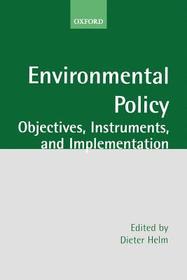
Environmental Policy
Objectives, Instruments, and Implementation
-
10% KEDVEZMÉNY?
- A kedvezmény csak az 'Értesítés a kedvenc témákról' hírlevelünk címzettjeinek rendeléseire érvényes.
- Kiadói listaár GBP 45.99
-
20 764 Ft (19 775 Ft + 5% áfa)
Az ár azért becsült, mert a rendelés pillanatában nem lehet pontosan tudni, hogy a beérkezéskor milyen lesz a forint árfolyama az adott termék eredeti devizájához képest. Ha a forint romlana, kissé többet, ha javulna, kissé kevesebbet kell majd fizetnie.
- Kedvezmény(ek) 10% (cc. 2 076 Ft off)
- Kedvezményes ár 18 687 Ft (17 798 Ft + 5% áfa)
Iratkozzon fel most és részesüljön kedvezőbb árainkból!
Feliratkozom
20 764 Ft

Beszerezhetőség
Megrendelésre a kiadó utánnyomja a könyvet. Rendelhető, de a szokásosnál kicsit lassabban érkezik meg.
Why don't you give exact delivery time?
A beszerzés időigényét az eddigi tapasztalatokra alapozva adjuk meg. Azért becsült, mert a terméket külföldről hozzuk be, így a kiadó kiszolgálásának pillanatnyi gyorsaságától is függ. A megadottnál gyorsabb és lassabb szállítás is elképzelhető, de mindent megteszünk, hogy Ön a lehető leghamarabb jusson hozzá a termékhez.
A termék adatai:
- Kiadó OUP Oxford
- Megjelenés dátuma 2000. november 30.
- ISBN 9780199241361
- Kötéstípus Puhakötés
- Terjedelem342 oldal
- Méret 235x156x18 mm
- Súly 522 g
- Nyelv angol
- Illusztrációk figures, tables 0
Kategóriák
Rövid leírás:
This volume addresses the practical issues which arise in applying economic instruments to environmental policy. It surveys the main concepts and tools?such as sustainability, biodiversity, and costbenefit analysis?and analyses the broad environmental policy agenda, including the global agreements on climate change and the narrow British context. The main sectors of the economy are surveyed, with particular attention paid to transport and agriculture.
TöbbHosszú leírás:
The twentieth century witnessed unparalleled economic growth among developed countries, largely based upon the exploitation of fossil fuels, and unparalleled population growth in developing countries. These broad trends in turn did massive damage to the environment. Biodiversity has suffered its biggest reverse since the last great extinctions in geological time, and the burning of fossil fuels has begun to change our climate.
But it was only at the end of the century that environmental concerns were transformed from a narrow sectional interest, moving to the centre-stage of government, and on to the main agendas of companies. Once a minority interest, the environment now commands the attention of ministers, chief executives, and consumers in the supermarket. Party manifestos proclaim the greenness of politicians, companies produce environmental reports, and shoppers opt for organic food and avoid genetically modified products.
This volume focuses on the practical design of economic instruments for environmental policy. It is divided into three parts: the overarching policy context; the choice of policy instruments; and applications to the main sectors of the economy.

