

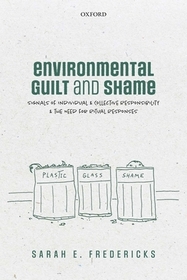
Environmental Guilt and Shame
Signals of Individual and Collective Responsibility and the Need for Ritual Responses
-
10% KEDVEZMÉNY?
- A kedvezmény csak az 'Értesítés a kedvenc témákról' hírlevelünk címzettjeinek rendeléseire érvényes.
- Kiadói listaár GBP 88.00
-
39 732 Ft (37 840 Ft + 5% áfa)
Az ár azért becsült, mert a rendelés pillanatában nem lehet pontosan tudni, hogy a beérkezéskor milyen lesz a forint árfolyama az adott termék eredeti devizájához képest. Ha a forint romlana, kissé többet, ha javulna, kissé kevesebbet kell majd fizetnie.
- Kedvezmény(ek) 10% (cc. 3 973 Ft off)
- Kedvezményes ár 35 759 Ft (34 056 Ft + 5% áfa)
Iratkozzon fel most és részesüljön kedvezőbb árainkból!
Feliratkozom
39 732 Ft

Beszerezhetőség
Megrendelésre a kiadó utánnyomja a könyvet. Rendelhető, de a szokásosnál kicsit lassabban érkezik meg.
Why don't you give exact delivery time?
A beszerzés időigényét az eddigi tapasztalatokra alapozva adjuk meg. Azért becsült, mert a terméket külföldről hozzuk be, így a kiadó kiszolgálásának pillanatnyi gyorsaságától is függ. A megadottnál gyorsabb és lassabb szállítás is elképzelhető, de mindent megteszünk, hogy Ön a lehető leghamarabb jusson hozzá a termékhez.
A termék adatai:
- Kiadó OUP Oxford
- Megjelenés dátuma 2021. június 9.
- ISBN 9780198842699
- Kötéstípus Keménykötés
- Terjedelem238 oldal
- Méret 241x165x20 mm
- Súly 522 g
- Nyelv angol 111
Kategóriák
Rövid leírás:
This study shows that many people in the US feel guilt about their everyday life. It explores many ethical questions including whether individuals or collectives are the guilty or shameful parties, whether agents should have these feelings, whether people should induce guilt or shame in others, and how people can respond to such feelings.
TöbbHosszú leírás:
Bloggers confessing that they waste food, non-governmental organizations naming corporations selling unsustainably harvested seafood, and veterans apologizing to Native Americans at the Standing Rock Sioux Reservation for environmental and social devastation caused by the United States government all signal the existence of action-oriented guilt and identity-oriented shame about participation in environmental degradation. Environmental Guilt and Shame demonstrates that these moral emotions are common among environmentally friendly segments of the United States but have received little attention from environmental ethicists though they can catalyze or hinder environmental action. Concern about environmental guilt and shame among “everyday environmentalists” reveals the practical, emotional, ethical, and existential issues raised by environmental guilt and shame and ethical insights about guilt, shame, responsibility, agency, and identity. A typology of guilt and shame enables the development and evaluation of these ethical insights.
Environmental Guilt and Shame makes three major claims: first, individuals and collectives, including the diffuse collectives that cause climate change, can have identity, agency, and responsibility and thus guilt and shame. Second, some agents, including collectives, should feel guilt and/or shame for environmental degradation if they hold environmental values and think that their actions shape and reveal their identity. Third, a number of conditions are required to conceptually, existentially, and practically deal with guilt and shame's effects on agents. These conditions can be developed and maintained through rituals. Existing rituals need more development to fully deal with individual and collective guilt and shame as well as the anthropogenic environmental degradation that may spark them.
The book builds an important case for thinking of collectives and guilt and shame.
Tartalomjegyzék:
List of Tables
Introduction
Evidence of Environmental Guilt and Shame
Typology of Guilt and Shame
Philosophical Arguments for Individuals, Memberships, and Collectives in States of Guilt or Shame
Environmental Guilt and Shame
Critics of Emotions and Collectives
Ethics of Environmental Guilt and Shame
The Ethics of Inducing and Responding to Guilt and Shame
Ritual Responses to Environmental Guilt and Shame
Epilogue: Looking Back, Looking Forward: Lessons from Studying Environmental Guilt and Shame
Works Cited

