

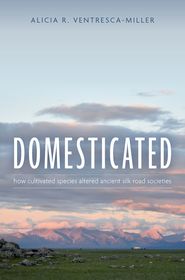
Domesticated
How Cultivated Species Altered Ancient Silk Road Societies
-
10% KEDVEZMÉNY?
- A kedvezmény csak az 'Értesítés a kedvenc témákról' hírlevelünk címzettjeinek rendeléseire érvényes.
- Kiadói listaár GBP 68.00
-
30 702 Ft (29 240 Ft + 5% áfa)
Az ár azért becsült, mert a rendelés pillanatában nem lehet pontosan tudni, hogy a beérkezéskor milyen lesz a forint árfolyama az adott termék eredeti devizájához képest. Ha a forint romlana, kissé többet, ha javulna, kissé kevesebbet kell majd fizetnie.
- Kedvezmény(ek) 10% (kb. 3 070 Ft)
- Kedvezményes ár 27 632 Ft (26 316 Ft + 5% áfa)
Iratkozzon fel most és részesüljön kedvezőbb árainkból!
Feliratkozom
30 702 Ft

Beszerezhetőség
Becsült beszerzési idő: A Prosperónál jelenleg nincsen raktáron, de a kiadónál igen. Beszerzés kb. 3-5 hét..
A Prosperónál jelenleg nincsen raktáron.
Why don't you give exact delivery time?
A beszerzés időigényét az eddigi tapasztalatokra alapozva adjuk meg. Azért becsült, mert a terméket külföldről hozzuk be, így a kiadó kiszolgálásának pillanatnyi gyorsaságától is függ. A megadottnál gyorsabb és lassabb szállítás is elképzelhető, de mindent megteszünk, hogy Ön a lehető leghamarabb jusson hozzá a termékhez.
A termék adatai:
- Kiadó OUP USA
- Megjelenés dátuma 2026. május 5.
- ISBN 9780197785942
- Kötéstípus Keménykötés
- Terjedelem296 oldal
- Méret 244x160x25 mm
- Súly 544 g
- Nyelv angol 684
Kategóriák
Rövid leírás:
Domesticated uses novel archaeological methods to rewrite the narrative of the rise of social complexity in the western and eastern Eurasian steppe. Through the study of ancient proteins, DNA, and isotopes, as well as traditional archaeology, it tracks the adoption of domesticated animals and plants to show how cultivated species transformed societies during the eras preceding the Silk Road networks.
TöbbHosszú leírás:
This is an open access title available under the terms of a CC BY-NC-ND 4.0 International licence. It is free to read at Oxford Academic and offered as a free PDF download from OUP and selected open access locations.
Domesticated uses novel archaeological methods to rewrite the narrative of the rise of social complexity in the western and eastern Eurasian steppe. Through the study of ancient proteins, DNA, and isotopes, as well as traditional archaeology, Alicia R. Ventresca-Miller tracks the adoption of domesticated animals and plants to show how cultivated species transformed societies during the eras preceding the Silk Road networks. Economies in this region shifted from hunting and gathering to the use of ruminant livestock, horse dairying and riding, and finally to the cultivation of grains, marking major thresholds in human history. Ventresca-Miller proposes a model for how this happened--from the initial introduction of the animal or plant to their acceptance, solidification, and intensification--and shows how each stage of development impacted the ways local communities interacted, settled in the landscape, and gave rise to new social structures.
The management of domesticated species and the alteration of landscapes allowed communities in north-central Asia to build complex societies and long-distance trading networks, which linked cities and supported Empires. In Domesticated, a nuanced narrative emerges, one that situates north-central Asia as a vital locale for the study of the adoption of domesticated species and underscores how these developments contributed to alternative forms of social complexity.
08/12/2025
Tartalomjegyzék:
Fueling Complexity: Trajectories of Ancient Societies in North-Central Asia
Landscapes of Foraging and Fishing
The Appropriation of Grasslands by Early Herders
Putting the Cart Before the Horse
Cultivating Complexity
How Domesticates Fueled the Rise of the Silk Roads

