

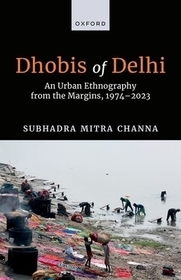
Dhobis of Delhi
An Urban Ethnography from the Margins, 1974–2023
-
10% KEDVEZMÉNY?
- A kedvezmény csak az 'Értesítés a kedvenc témákról' hírlevelünk címzettjeinek rendeléseire érvényes.
- Kiadói listaár GBP 90.00
-
40 635 Ft (38 700 Ft + 5% áfa)
Az ár azért becsült, mert a rendelés pillanatában nem lehet pontosan tudni, hogy a beérkezéskor milyen lesz a forint árfolyama az adott termék eredeti devizájához képest. Ha a forint romlana, kissé többet, ha javulna, kissé kevesebbet kell majd fizetnie.
- Kedvezmény(ek) 10% (cc. 4 064 Ft off)
- Kedvezményes ár 36 572 Ft (34 830 Ft + 5% áfa)
Iratkozzon fel most és részesüljön kedvezőbb árainkból!
Feliratkozom
40 635 Ft

Beszerezhetőség
Megrendelésre a kiadó utánnyomja a könyvet. Rendelhető, de a szokásosnál kicsit lassabban érkezik meg.
Why don't you give exact delivery time?
A beszerzés időigényét az eddigi tapasztalatokra alapozva adjuk meg. Azért becsült, mert a terméket külföldről hozzuk be, így a kiadó kiszolgálásának pillanatnyi gyorsaságától is függ. A megadottnál gyorsabb és lassabb szállítás is elképzelhető, de mindent megteszünk, hogy Ön a lehető leghamarabb jusson hozzá a termékhez.
A termék adatai:
- Kiadó OUP Oxford
- Megjelenés dátuma 2024. szeptember 12.
- ISBN 9780198926207
- Kötéstípus Keménykötés
- Terjedelem272 oldal
- Méret 216x140 mm
- Súly 10 g
- Nyelv angol 537
Kategóriák
Rövid leírás:
Dhobis of Delhi covers more than forty years of interactions with an 'untouchable' caste--the Dhobis (washermen and washerwomen), who are among Delhi's oldest inhabitants, describing their ways of life, economy, livelihood, struggles, and adaptation to the city's changing demographic, cultural, and politico-economic profile.
TöbbHosszú leírás:
Dhobis of Delhi: An Urban Ethnography from the Margins, 1974–2023 is a saga covering more than four decades of interactions with an 'untouchable' caste--the Dhobis (washermen and washerwomen), who are among Delhi's oldest inhabitants. It describes their ways of life, economy, livelihood, struggles, and adaptation to the city's changing demographic, cultural, and politico-economic profile. Utilizing an experiential perspective and a gendered and feminist approach, the author elaborates on the Dhobi identity, which is focused on their community (biradari), and discusses their struggles to be identified as skilled professionals at par with others, rejecting at the same time the political identity of being Dalit. Discarding their earlier subjugated sense of the self, the Dhobis are developing an emerging consciousness as democratic citizens, nurturing ambitions of a future where they will find acceptance as a community. To that end, the book also analyses how their marginalized caste-based occupation and skills ensure for them a livelihood and viability within the market economy. Highlighting the community's strategies and tactics of survival and resilience against all odds, Dhobis of Delhi is thus the story of a city viewed through the eyes of those who live on the lowest rung of its social hierarchy but whose contribution to the life of the city is essential, albeit invisible.
An illuminating contribution to the study of cities and margins worldwide, the anthropology of South Asia, caste, or class, this book is an eye-opening exploration of choices people make to identify themselves with particular social movements, advocacy groups, and political ideologies. The product of many years of ethnographic engagement, this work is both about Delhi and a small community in the city--a group of 'untouchables' who have chosen not to join the Dalit movement or identify as Dalit. How the modern city affects the Dhobi becomes clear in Channa's work, something both engrossing and humanistic. I can think of no one as knowledgeable and insightful as she is in this book.
Tartalomjegyzék:
Introduction: Doing Urban Ethnography in the Present
The Dhobis of Old Delhi: Narratives from the Margin about a Community, a River, and a City
The Social World of the Dhobis
Livelihood, Resources, and Strategies for Survival
Living Life as a Dhobi (Man and Woman)
Negotiating Power in the Realm of the Sacred
The Political Realm
Conclusion: Surviving in a Discriminatory World and the Future of the City

