

-
10% KEDVEZMÉNY?
- A kedvezmény csak az 'Értesítés a kedvenc témákról' hírlevelünk címzettjeinek rendeléseire érvényes.
- Kiadói listaár GBP 100.00
-
45 150 Ft (43 000 Ft + 5% áfa)
Az ár azért becsült, mert a rendelés pillanatában nem lehet pontosan tudni, hogy a beérkezéskor milyen lesz a forint árfolyama az adott termék eredeti devizájához képest. Ha a forint romlana, kissé többet, ha javulna, kissé kevesebbet kell majd fizetnie.
- Kedvezmény(ek) 10% (cc. 4 515 Ft off)
- Kedvezményes ár 40 635 Ft (38 700 Ft + 5% áfa)
Iratkozzon fel most és részesüljön kedvezőbb árainkból!
Feliratkozom
45 150 Ft

Beszerezhetőség
Megrendelésre a kiadó utánnyomja a könyvet. Rendelhető, de a szokásosnál kicsit lassabban érkezik meg.
Why don't you give exact delivery time?
A beszerzés időigényét az eddigi tapasztalatokra alapozva adjuk meg. Azért becsült, mert a terméket külföldről hozzuk be, így a kiadó kiszolgálásának pillanatnyi gyorsaságától is függ. A megadottnál gyorsabb és lassabb szállítás is elképzelhető, de mindent megteszünk, hogy Ön a lehető leghamarabb jusson hozzá a termékhez.
A termék adatai:
- Kiadó OUP USA
- Megjelenés dátuma 2020. január 24.
- ISBN 9780190088897
- Kötéstípus Keménykötés
- Terjedelem296 oldal
- Méret 163x236x35 mm
- Súly 612 g
- Nyelv angol 0
Kategóriák
Rövid leírás:
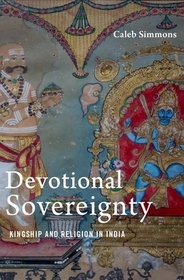
Devotional Sovereignty: Kingship and Religion in India investigates the shifting conceptualization of sovereignty in the South Indian kingdom of Mysore during the reigns of Tipu Sultan (r. 1782-1799) and Krishnaraja Wodeyar III (r. 1799-1868). Tipu Sultan was a Muslim king famous for resisting British dominance until his death; Krishnaraja III was a Hindu king who succumbed to British political and administrative control. Despite their differences, the courts of both kings dealt with the changing political landscape by turning to the religious and mythical past to construct a royal identity for their kings. Caleb Simmons explores the ways in which these two kings and their courts modified and adapted pre-modern Indian notions of sovereignty and kingship in reaction to British intervention.
TöbbHosszú leírás:
Devotional Sovereignty: Kingship and Religion in India investigates the shifting conceptualization of sovereignty in the South Indian kingdom of Mysore during the reigns of Tipu Sultan (r. 1782-1799) and Krishnaraja Wodeyar III (r. 1799-1868). Tipu Sultan was a Muslim king famous for resisting British dominance until his death; Krishnaraja III was a Hindu king who succumbed to British political and administrative control. Despite their differences, the courts of both kings dealt with the changing political landscape by turning to the religious and mythical past to construct a royal identity for their kings. Caleb Simmons explores the ways in which these two kings and their courts modified and adapted pre-modern Indian notions of sovereignty and kingship in reaction to British intervention.
The religious past provided an idiom through which the Mysore courts could articulate their rulers' claims to kingship in the region, attributing their rule to divine election and employing religious vocabulary in a variety of courtly genres and media. Through critical inquiry into the transitional early colonial period, this study sheds new light on pre-modern and modern India, with implications for our understanding of contemporary politics. It offers a revisionist history of the accepted narrative in which Tipu Sultan is viewed as a radical Muslim reformer and Krishnaraja III as a powerless British puppet. Simmons paints a picture of both rulers in which they work within and from the same understanding of kingship, utilizing devotion to Hindu gods, goddesses, and gurus to perform the duties of the king.
In his brilliant and evocative boook, Devotional Sovereignty: Kingship and Religion in India, Caleb Simmons...importantly centers questions of theology in relation to sovereignty, making Devotional Sovereignty essential reading...
Tartalomjegyzék:
Introduction: Kingship and Sovereignty in Mysore
Section ONE: Tipu Sultan
Chapter 1: The King of Seringapatam
Chapter 2: The Sultan, the Sufi, and the Guru
Chapter 3: Divine Warfare and Diplomacy
Section Two: Krishnaraja Wodeyar III
Chapter 4: Restoring An "Ancient Hindu" Family
Chapter 5: Portraying Devotion
Chapter 6: Displaying Power
Chapter 7: Mapping New Sovereignty
Epilogue

