

-
10% KEDVEZMÉNY?
- A kedvezmény csak az 'Értesítés a kedvenc témákról' hírlevelünk címzettjeinek rendeléseire érvényes.
- Kiadói listaár GBP 51.00
-
23 026 Ft (21 930 Ft + 5% áfa)
Az ár azért becsült, mert a rendelés pillanatában nem lehet pontosan tudni, hogy a beérkezéskor milyen lesz a forint árfolyama az adott termék eredeti devizájához képest. Ha a forint romlana, kissé többet, ha javulna, kissé kevesebbet kell majd fizetnie.
- Kedvezmény(ek) 10% (cc. 2 303 Ft off)
- Kedvezményes ár 20 724 Ft (19 737 Ft + 5% áfa)
Iratkozzon fel most és részesüljön kedvezőbb árainkból!
Feliratkozom
23 026 Ft

Beszerezhetőség
Megrendelésre a kiadó utánnyomja a könyvet. Rendelhető, de a szokásosnál kicsit lassabban érkezik meg.
Why don't you give exact delivery time?
A beszerzés időigényét az eddigi tapasztalatokra alapozva adjuk meg. Azért becsült, mert a terméket külföldről hozzuk be, így a kiadó kiszolgálásának pillanatnyi gyorsaságától is függ. A megadottnál gyorsabb és lassabb szállítás is elképzelhető, de mindent megteszünk, hogy Ön a lehető leghamarabb jusson hozzá a termékhez.
A termék adatai:
- Kiadó OUP Oxford
- Megjelenés dátuma 2018. november 29.
- ISBN 9780198794486
- Kötéstípus Keménykötés
- Terjedelem268 oldal
- Méret 240x163x24 mm
- Súly 574 g
- Nyelv angol
- Illusztrációk 12 black and white figures/images 40
Kategóriák
Rövid leírás:
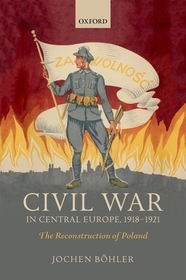
Civil War in Central Europe argues that Polish independence after the First World War was forged in the fires of the post-war conflicts which should be collectively referred to as the Central European Civil War (1918-1921). The ensuing violence forced those living in European border regions to decide on their national identity - German or Polish.
TöbbHosszú leírás:
The First World War did not end in Central Europe in November 1918. The armistices marked the creation of the Second Polish Republic and the first shot of the Central European Civil War which raged from 1918 to 1921. The fallen German, Russian, and Austrian Empires left in their wake lands with peoples of mixed nationalities and ethnicities. These lands soon became battle grounds and the ethno-political violence that ensued forced those living within them to decide on their national identity.
Civil War in Central Europe seeks to challenge previous notions that such conflicts which occurred between the First and Second World Wars were isolated incidents and argues that they should be considered as part of a European war; a war which transformed Poland into a nation.
...[T]he book is definitely very important and valuable: it shows the formation of the Polish state in a new light that undermines traditional nationalist historiography and popular ideas...The book allows us to go beyond nationalist conventional wisdom.
Tartalomjegyzék:
List of Illustrations and Maps
Introduction
Nations, States, and Conflict in Central Europe
How to Mobilize the Polish Nation
The Central European Civil War
Violence and Crimes Beyond the Battlefields
Conclusion
Epilogue

