

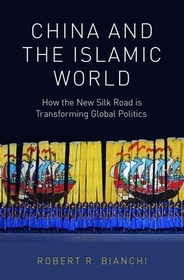
China and the Islamic World
How the New Silk Road is Transforming Global Politics
-
20% KEDVEZMÉNY?
- A kedvezmény csak az 'Értesítés a kedvenc témákról' hírlevelünk címzettjeinek rendeléseire érvényes.
- Kiadói listaár GBP 30.99
-
13 991 Ft (13 325 Ft + 5% áfa)
Az ár azért becsült, mert a rendelés pillanatában nem lehet pontosan tudni, hogy a beérkezéskor milyen lesz a forint árfolyama az adott termék eredeti devizájához képest. Ha a forint romlana, kissé többet, ha javulna, kissé kevesebbet kell majd fizetnie.
- Kedvezmény(ek) 20% (cc. 2 798 Ft off)
- Kedvezményes ár 11 193 Ft (10 660 Ft + 5% áfa)
- A kedvezmény érvényes eddig: 2026. június 30.
Iratkozzon fel most és részesüljön kedvezőbb árainkból!
Feliratkozom
13 991 Ft

Beszerezhetőség
Becsült beszerzési idő: A Prosperónál jelenleg nincsen raktáron, de a kiadónál igen. Beszerzés kb. 3-5 hét..
A Prosperónál jelenleg nincsen raktáron.
Why don't you give exact delivery time?
A beszerzés időigényét az eddigi tapasztalatokra alapozva adjuk meg. Azért becsült, mert a terméket külföldről hozzuk be, így a kiadó kiszolgálásának pillanatnyi gyorsaságától is függ. A megadottnál gyorsabb és lassabb szállítás is elképzelhető, de mindent megteszünk, hogy Ön a lehető leghamarabb jusson hozzá a termékhez.
A termék adatai:
- Kiadó OUP USA
- Megjelenés dátuma 2019. március 21.
- ISBN 9780190915285
- Kötéstípus Keménykötés
- Terjedelem304 oldal
- Méret 239x157x25 mm
- Súly 590 g
- Nyelv angol
- Illusztrációk 42 0
Kategóriák
Rövid leírás:
China is building a New Silk Road that runs through the heartland of the Muslim world, promising it will create integrated economies and stronger ties across Eurasia and Africa. Robert R. Bianchi argues that while China has the financial and technical resources to accomplish its infrastructure goals, it is woefully unprepared to deal with the social and political demands of its partner countries' citizens.
TöbbHosszú leírás:
China is building a New Silk Road that runs through the heartland of the Muslim world, promising it will create integrated economies and stronger ties across Eurasia and Africa. Robert R. Bianchi argues that while China has the financial and technical resources to accomplish its infrastructure goals, it is woefully unprepared to deal with the social and political demands of its partner countries' citizens.
China and the Islamic World explores how China's leaders and citizens are learning-through their relationships with Pakistan, Turkey, Indonesia, Iran, Nigeria and Egypt-that they have to respect and adjust to the aspirations of ordinary people throughout the Islamic world, not just cater to the narrow band of government and business elites. Bianchi demonstrates that turbulent countries along the New Silk Road are likely to transform Chinese society at least as much as China changes them. This realization will be deeply unsettling for China's authoritarian rulers, who desperately want to monopolize power domestically. The party and state bosses have responded to challenges with a contradictory blend of flexibility abroad and rigidity at home, compromising with popular demands in one country after another while refusing to negotiate many of the same issues with their own citizens. This book shows how China faces a growing struggle to maintain their double-sided statecraft as it becomes apparent that the New Silk Road is not a one way street.
The book is a welcome contribution to China's foreign diplomacy and international economic relations under Xi Jinping's leadership. More significantly, the book successfully presents both China's and the partnering countries' interests in the BRI and discloses the potential disagreements regarding their respective future ambitions...Bianchi's recommendations for preventing problems which may arise during the implementation of the BRI projects make the book a useful source for diplomats in China and BRI partnering counties. The book is also interesting to a wider audience who want to understand China's foreign diplomacy and international economic strategies.
Tartalomjegyzék:
Preface
List of Tables
List of Figures
Introduction
Chapter 1: What Is New About the New Silk Road?
Chapter 2: Megaregions and Coevolution in World Politics
Chapter 3: Pakistan: Deep Democracy and Shallow Strategy
Chapter 4: Turkey: Competing Partner
Chapter 5: Indonesia: Inherent Weakness and Increasing Leverage
Chapter 6: Iran: The Great Divider
Chapter 7: Nigeria: A Shaky Bridge
Chapter 8: Egypt: Weighing the Tolls
Chapter 9: Islam and the Opening of the Chinese Mind
Chapter 10: Learning Abroad, Evading at Home
Chapter 11: The Bitter and the Sweet
Notes
Selected Bibliography

