

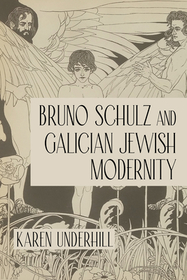
Bruno Schulz and Galician Jewish Modernity
Sorozatcím: Jews of Eastern Europe;
-
20% KEDVEZMÉNY?
- A kedvezmény csak az 'Értesítés a kedvenc témákról' hírlevelünk címzettjeinek rendeléseire érvényes.
- Kiadói listaár GBP 64.00
-
28 896 Ft (27 520 Ft + 5% áfa)
Az ár azért becsült, mert a rendelés pillanatában nem lehet pontosan tudni, hogy a beérkezéskor milyen lesz a forint árfolyama az adott termék eredeti devizájához képest. Ha a forint romlana, kissé többet, ha javulna, kissé kevesebbet kell majd fizetnie.
- Kedvezmény(ek) 20% (cc. 5 779 Ft off)
- Kedvezményes ár 23 117 Ft (22 016 Ft + 5% áfa)
- A kedvezmény érvényes eddig: 2026. június 30.
Iratkozzon fel most és részesüljön kedvezőbb árainkból!
Feliratkozom
28 896 Ft

Beszerezhetőség
Becsült beszerzési idő: A Prosperónál jelenleg nincsen raktáron, de a kiadónál igen. Beszerzés kb. 3-5 hét..
A Prosperónál jelenleg nincsen raktáron.
Why don't you give exact delivery time?
A beszerzés időigényét az eddigi tapasztalatokra alapozva adjuk meg. Azért becsült, mert a terméket külföldről hozzuk be, így a kiadó kiszolgálásának pillanatnyi gyorsaságától is függ. A megadottnál gyorsabb és lassabb szállítás is elképzelhető, de mindent megteszünk, hogy Ön a lehető leghamarabb jusson hozzá a termékhez.
A termék adatai:
- Kiadó Indiana University Press
- Megjelenés dátuma 2024. június 25.
- Kötetek száma Print PDF
- ISBN 9780253057273
- Kötéstípus Keménykötés
- Terjedelem300 oldal
- Méret 229x152 mm
- Súly 612 g
- Nyelv angol
- Illusztrációk 20 b&w illus. Illustrations, black & white 515
Kategóriák
Hosszú leírás:
In the 1930s, through the prose of Bruno Schulz (1892–1942), the Polish language became the linguistic raw material for a profound exploration of the modern Jewish experience. Rather than turning away from the language like many of his Galician Jewish colleagues who would choose to write in Yiddish, Schulz used the Polish language to explore his own and his generation's relationship to East European Jewish exegetical tradition, and to deepen his reflection on golus or exile as a condition not only of the individual and of the Jewish community, but of language itself, and of matter. Drawing on new archival discoveries, this study explores Schulz's diasporic Jewish modernism as an example of the creative and also transient poetic forms that emerged on formerly Habsburg territory, at the historical juncture between empire and nation-state.
TöbbTartalomjegyzék:
"
Preface
Acknowledgments
Introduction: Bruno Schulz and the Archaeology of Polish Jewish Modernism
1. Leading the Word Out of Its Golus: Jewish Writing in the Polish Vernacular
2. ""A Creation Born of the Longing of Golus"": Schulz's 'E.M. Lilien' and the Art of the Modern Jewish Book
3. The Sunday Seminars of Bruno Schulz and Debora Vogel
4. Sanatorium under the Sign of the Hourglass
5. Acculturation without Assimilation: Polish Contexts for a Translational Poetics
6. ""What Have You Done with the Book?"": The Scriptural Impulse from Idolatrous Iconography to Redemptive Midrash
Notes
Bibliography
Index

