

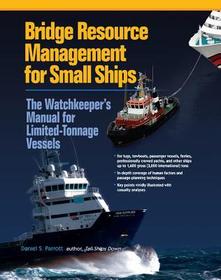
Bridge Resource Management for Small Ships: The Watchkeeper's Manual for Limited-Tonnage Vessels
The Watchkeeper's Manual for Limited-Tonnage Vessels
-
10% KEDVEZMÉNY?
- A kedvezmény csak az 'Értesítés a kedvenc témákról' hírlevelünk címzettjeinek rendeléseire érvényes.
- Kiadói listaár GBP 53.99
-
24 376 Ft (23 215 Ft + 5% áfa)
Az ár azért becsült, mert a rendelés pillanatában nem lehet pontosan tudni, hogy a beérkezéskor milyen lesz a forint árfolyama az adott termék eredeti devizájához képest. Ha a forint romlana, kissé többet, ha javulna, kissé kevesebbet kell majd fizetnie.
- Kedvezmény(ek) 10% (cc. 2 438 Ft off)
- Kedvezményes ár 21 938 Ft (20 894 Ft + 5% áfa)
Iratkozzon fel most és részesüljön kedvezőbb árainkból!
Feliratkozom
24 376 Ft

Beszerezhetőség
A kiadónál véglegesen elfogyott, nem rendelhető. Érdemes újra keresni a címmel, hátha van újabb kiadás.
Why don't you give exact delivery time?
A beszerzés időigényét az eddigi tapasztalatokra alapozva adjuk meg. Azért becsült, mert a terméket külföldről hozzuk be, így a kiadó kiszolgálásának pillanatnyi gyorsaságától is függ. A megadottnál gyorsabb és lassabb szállítás is elképzelhető, de mindent megteszünk, hogy Ön a lehető leghamarabb jusson hozzá a termékhez.
A termék adatai:
- Kiadó International Marine
- Megjelenés dátuma 2011. április 16.
- ISBN 9780071550079
- Kötéstípus Keménykötés
- Terjedelem192 oldal
- Méret 287x223x15 mm
- Súly 735 g
- Nyelv angol 0
Kategóriák
Rövid leírás:
The first book on this required course of training written especially for officers aboard small ships.
TöbbHosszú leírás:
Your vessel may be equipped with the most advanced technology and the most powerful engines, but the failure to apply the basic principles of bridge resource management can still prevent you from getting where you are going.
Satellite systems, ARPA, electronic charts, AIS, sophisticated communication equipment and integrated navigational systems?all these advanced technologies provide valuable capabilities. But accidents still happen, and they usually involve human error. This simple fact has made Bridge Resource Management (BRM) training a requirement for watchkeepers worldwide. Bridge Resource Management for Small Ships: The Watchkeeper?s Manual for Limited-Tonnage Vessels is the first book to address the unique needs of operators of small ships (limited-tonnage vessels) including tugs, ferries, yachts, and other passenger-carrying vessels.
Features:
- Case histories to illustrate important points
- A complete course in BRM, suited for studying on your own as well as a complement to your classwork
Topics include: Introduction to BRM, Standard Operating Procedures, Passage Planning, Implementing the Passage Plan, Building a Passage Plan, Situational Awareness and Human Factors, including: Overreliance, Distraction, Stress, Fatigue, Complacency, and Transition; and Human Interactions, including Communications, Teams and Teamwork, Decision Making and Leadership, and Human Error
Your vessel may be equipped with the most advanced technology and the most powerful engines, but the failure to apply the basic principles of bridge resource management can still prevent you from getting where you are going.
Satellite systems, ARPA, electronic charts, AIS, sophisticated communication equipment and integrated navigational systems?all these advanced technologies provide valuable capabilities. But accidents still happen, and they usually involve human error. This simple fact has made Bridge Resource Management (BRM) training a requirement for watchkeepers worldwide. Bridge Resource Management for Small Ships: The Watchkeeper?s Manual for Limited-Tonnage Vessels is the first book to address the unique needs of operators of small ships (limited-tonnage vessels) including tugs, ferries, yachts, and other passenger-carrying vessels.
Features:
- Case histories to illustrate important points
- A complete course in BRM, suited for studying on your own as well as a complement to your classwork
Topics include: Introduction to BRM, Standard Operating Procedures, Passage Planning, Implementing the Passage Plan, Building a Passage Plan, Situational Awareness and Human Factors, including: Overreliance, Distraction, Stress, Fatigue, Complacency, and Transition; and Human Interactions, including Communications, Teams and Teamwork, Decision Making and Leadership, and Human Error
Több
