
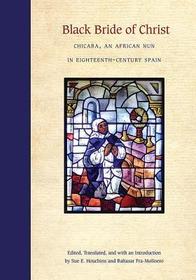
Black Bride of Christ – Chicaba, an African Nun in Eighteenth–Century Spain
Chicaba, an African Nun in Eighteenth-Century Spain
-
10% KEDVEZMÉNY?
- A kedvezmény csak az 'Értesítés a kedvenc témákról' hírlevelünk címzettjeinek rendeléseire érvényes.
- Kiadói listaár GBP 80.00
-
38 220 Ft (36 400 Ft + 5% áfa)
Az ár azért becsült, mert a rendelés pillanatában nem lehet pontosan tudni, hogy a beérkezéskor milyen lesz a forint árfolyama az adott termék eredeti devizájához képest. Ha a forint romlana, kissé többet, ha javulna, kissé kevesebbet kell majd fizetnie.
- Kedvezmény(ek) 10% (cc. 3 822 Ft off)
- Kedvezményes ár 34 398 Ft (32 760 Ft + 5% áfa)
Iratkozzon fel most és részesüljön kedvezőbb árainkból!
Feliratkozom
38 220 Ft
Beszerezhetőség
Még nem jelent meg, de rendelhető. A megjelenéstől számított néhány héten belül megérkezik.
Why don't you give exact delivery time?
A beszerzés időigényét az eddigi tapasztalatokra alapozva adjuk meg. Azért becsült, mert a terméket külföldről hozzuk be, így a kiadó kiszolgálásának pillanatnyi gyorsaságától is függ. A megadottnál gyorsabb és lassabb szállítás is elképzelhető, de mindent megteszünk, hogy Ön a lehető leghamarabb jusson hozzá a termékhez.
A termék adatai:
- Kiadó University of Chicago Press
- Megjelenés dátuma 2026. március 25.
- Kötetek száma Hardback
- ISBN 9780826521033
- Kötéstípus Keménykötés
- Terjedelem336 oldal
- Méret 254x177 mm
- Súly 775 g
- Nyelv angol
- Illusztrációk 10 black & white illustrations 700
Kategóriák
Rövid leírás:
Teresa de Santo Domingo was a slave captured in the territory known as La Mina Baja del Oro. Her life story is known to us through a document entitled Compendio de la Vida Ejemplar de la Venerable Madre Sor Teresa Juliana de Santo Domingo. This volume, the first English translation of the Compendio, is a hagiography, an example of a biographical genre that recounts the lives and describes the spiritual practices of holy people.
TöbbHosszú leírás:
Teresa de Santo Domingo, born with the name Chicaba, was a slave captured in the territory known to seventeenth- and eighteenth-century Spanish and Portuguese navigators and slave traffickers as La Mina Baja del Oro, the part of West Africa that extends through present-day eastern Ghana, Togo, Benin, and western Nigeria. Upon the death of her Spanish master, she was freed to enter a convent. The Dominicans of La Penitencia in Salamanca accepted her after she had been rejected by several other monasteries because of her skin color. Even in her own religious community, race put her at a disadvantage in the highly stratified social hierarchy of monastic houses of the era. Her life story is known to us through a document entitled Compendio de la Vida Ejemplar de la Venerable Madre Sor Teresa Juliana de Santo Domingo, which is the foundational documentary evidence in the case for beatification of this nun, and as such it is the most significant and comprehensive source of information about her.
This volume, the first English translation of the Compendio, is a hagiography, an example of a biographical genre that recounts the lives and describes the spiritual practices of holy people - saints officially canonized by the Church, informally recognized by local devotees, or respected ecclesiastical leaders. The effort to have Chicaba canonized continues today, as Fra-Molinero and Houchins explore in their introduction to the volume.