

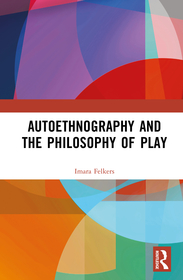
Autoethnography and the Philosophy of Play
-
20% KEDVEZMÉNY?
- A kedvezmény csak az 'Értesítés a kedvenc témákról' hírlevelünk címzettjeinek rendeléseire érvényes.
- Kiadói listaár GBP 155.00
-
69 982 Ft (66 650 Ft + 5% áfa)
Az ár azért becsült, mert a rendelés pillanatában nem lehet pontosan tudni, hogy a beérkezéskor milyen lesz a forint árfolyama az adott termék eredeti devizájához képest. Ha a forint romlana, kissé többet, ha javulna, kissé kevesebbet kell majd fizetnie.
- Kedvezmény(ek) 20% (cc. 13 996 Ft off)
- Kedvezményes ár 55 986 Ft (53 320 Ft + 5% áfa)
- A kedvezmény érvényes eddig: 2026. június 30.
Iratkozzon fel most és részesüljön kedvezőbb árainkból!
Feliratkozom
62 984 Ft

Beszerezhetőség
Még nem jelent meg, de rendelhető. A megjelenéstől számított néhány héten belül megérkezik.
Why don't you give exact delivery time?
A beszerzés időigényét az eddigi tapasztalatokra alapozva adjuk meg. Azért becsült, mert a terméket külföldről hozzuk be, így a kiadó kiszolgálásának pillanatnyi gyorsaságától is függ. A megadottnál gyorsabb és lassabb szállítás is elképzelhető, de mindent megteszünk, hogy Ön a lehető leghamarabb jusson hozzá a termékhez.
A termék adatai:
- Kiadás sorszáma 1
- Kiadó Routledge
- Megjelenés dátuma 2026. augusztus 18.
- ISBN 9781041102489
- Kötéstípus Keménykötés
- Terjedelem194 oldal
- Méret 234x156 mm
- Nyelv angol
- Illusztrációk 28 Illustrations, black & white; 18 Halftones, black & white; 10 Line drawings, black & white; 10 Tables, black & white 700
Kategóriák
Rövid leírás:
Autoethnography and the Philosophy of Play examines the ways in which play can provide insight into important existential questions.
TöbbHosszú leírás:
Autoethnography and the Philosophy of Play examines the ways in which play can provide insight into important existential questions.
Using literary, autoethnographic methods that position the author as the central subject, the book shows how the philosophy of play can enrich our sense-making and meaning-making. With the themes of childhood play and cycling running through the book, the lived experiences of the author are used to explore a range of subjects, including post-feminist interpretations of play, the intergenerational impact of war trauma, and the ontology of play. The phenomenon of toys, for instance, is used to bridge childhood and adult play, offering tangible examples for understanding play’s metaphysical aspects. The book also explores the concept that Eugen Fink referred to as ‘masked play’, uncovering hidden aspects of our play in adulthood and underscoring the view that the things which make us human are both familiar and elusive.
This book is fascinating reading for anybody with an interest in the philosophy of play, sport, leisure, or education; existential philosophy; phenomenology; or gender studies.
"Felkers proposes an intriguing combination of phenomenological research and autoethnography that results in a philosophical journey through the different ways we play and are played throughout our lives. It is a beautiful example of playful and lived philosophy that can inspire philosophers, playworkers, and artists to find their path to self-experimentation with concepts."
— Núria Sara Miras Boronat, University of Barcelona, Spain
"This publication uniquely combines a set of theoretical and methodological approaches to the understanding of philosophy of play in relation to the identities of humans in their ‘playful’ practices via the reflexivity of autoethnographic methods.’
— Professor Ros Jennings, University of Gloucestershire, UK
TöbbTartalomjegyzék:
Rationale: Playing the philosophy of play. Départ fictif. 1. Playing Homo Ludens. 2. The magic circle leaks. 3. Chasse patate in no-no-land: The embodiment of Fink’s thoughts in Flanders Fields. 4. The permeable character of playing. 5. The spatiality of mimesis: Play, relocation, and the embodiment of a situated life. 6. The hidden land: On the permeability of play in radically earthly anthropology.
Több
