

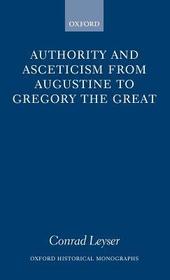
Authority and Asceticism from Augustine to Gregory the Great
Sorozatcím: Oxford Historical Monographs;
-
10% KEDVEZMÉNY?
- A kedvezmény csak az 'Értesítés a kedvenc témákról' hírlevelünk címzettjeinek rendeléseire érvényes.
- Kiadói listaár GBP 212.50
-
95 943 Ft (91 375 Ft + 5% áfa)
Az ár azért becsült, mert a rendelés pillanatában nem lehet pontosan tudni, hogy a beérkezéskor milyen lesz a forint árfolyama az adott termék eredeti devizájához képest. Ha a forint romlana, kissé többet, ha javulna, kissé kevesebbet kell majd fizetnie.
- Kedvezmény(ek) 10% (cc. 9 594 Ft off)
- Kedvezményes ár 86 349 Ft (82 238 Ft + 5% áfa)
Iratkozzon fel most és részesüljön kedvezőbb árainkból!
Feliratkozom
95 943 Ft

Beszerezhetőség
Megrendelésre a kiadó utánnyomja a könyvet. Rendelhető, de a szokásosnál kicsit lassabban érkezik meg.
Why don't you give exact delivery time?
A beszerzés időigényét az eddigi tapasztalatokra alapozva adjuk meg. Azért becsült, mert a terméket külföldről hozzuk be, így a kiadó kiszolgálásának pillanatnyi gyorsaságától is függ. A megadottnál gyorsabb és lassabb szállítás is elképzelhető, de mindent megteszünk, hogy Ön a lehető leghamarabb jusson hozzá a termékhez.
A termék adatai:
- Kiadó Clarendon Press
- Megjelenés dátuma 2000. október 5.
- ISBN 9780198208686
- Kötéstípus Keménykötés
- Terjedelem236 oldal
- Méret 224x146x17 mm
- Súly 395 g
- Nyelv angol 0
Kategóriák
Rövid leírás:
When barbarians invaded the Roman Empire in the years around 400 AD, Christian monks hid in their cloisters - or so it is often assumed. Conrad Leyser shows is that monks in the early medieval West were, in fact, pioneers in the creation of a new language of moral authority. He describes the making of this tradition over two centuries from St Augustine to St Benedict and Gregory the Great.
TöbbHosszú leírás:
Conrad Leyser examines the formation of the Christian ascetic tradition in the western Roman Empire during the period of the barbarian invasions, c.400-600. In an aggressively competitive political context, one of the most articulate claims to power was made, paradoxically, by men who had renounced 'the world', committing themselves to a life of spiritual discipline in the hope of gaining entry to an otherworldly kingdom. Often dismissed as mere fanaticism or open hypocrisy, the language of ascetic authority, Conrad Leyser shows, was both carefully honed and well understood in the late Roman and early medieval Mediterranean. Dr Leyser charts the development of this new moral rhetoric by abbots, teachers, and bishops from the time of Augustine of Hippo to that of St Benedict and Gregory the Great.
Breaks new and important ground in the study of episcopal and monastic authority in late antiquity ... this is an important book for historians of late antiquity, church historians, ascetical theologians, historians of monasticism, and historians of Christian thought. In every respect, this is a superlative study by a scholar whose work is significant.

