

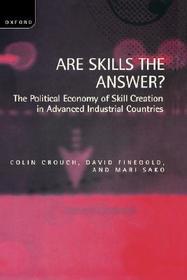
Are Skills the Answer?
The Political Economy of Skill Creation in Advanced Industrial Countries
-
10% KEDVEZMÉNY?
- A kedvezmény csak az 'Értesítés a kedvenc témákról' hírlevelünk címzettjeinek rendeléseire érvényes.
- Kiadói listaár GBP 215.00
-
97 072 Ft (92 450 Ft + 5% áfa)
Az ár azért becsült, mert a rendelés pillanatában nem lehet pontosan tudni, hogy a beérkezéskor milyen lesz a forint árfolyama az adott termék eredeti devizájához képest. Ha a forint romlana, kissé többet, ha javulna, kissé kevesebbet kell majd fizetnie.
- Kedvezmény(ek) 10% (cc. 9 707 Ft off)
- Kedvezményes ár 87 365 Ft (83 205 Ft + 5% áfa)
Iratkozzon fel most és részesüljön kedvezőbb árainkból!
Feliratkozom
97 072 Ft

Beszerezhetőség
Megrendelésre a kiadó utánnyomja a könyvet. Rendelhető, de a szokásosnál kicsit lassabban érkezik meg.
Why don't you give exact delivery time?
A beszerzés időigényét az eddigi tapasztalatokra alapozva adjuk meg. Azért becsült, mert a terméket külföldről hozzuk be, így a kiadó kiszolgálásának pillanatnyi gyorsaságától is függ. A megadottnál gyorsabb és lassabb szállítás is elképzelhető, de mindent megteszünk, hogy Ön a lehető leghamarabb jusson hozzá a termékhez.
A termék adatai:
- Kiadó OUP Oxford
- Megjelenés dátuma 1999. február 11.
- ISBN 9780198294382
- Kötéstípus Keménykötés
- Terjedelem296 oldal
- Méret 242x162x21 mm
- Súly 557 g
- Nyelv angol
- Illusztrációk 2 figures, 20 tables 0
Kategóriák
Rövid leírás:
High priority is now given to training and education in all industrial countries to meet the demands of the `new knowledge economy'. This book analyses the policies and provision of vocational education in advanced industrial countries (UK, USA, Japan, Sweden etc.) against the backdrop of changing labour markets. In doing so it challenges widely held assumptions about skills and employment growth, and explores the roles that government and the private sector could play in developing advanced skills policies and initiatives.
TöbbHosszú leírás:
This study of the problems confronting institutions for the creation of occupational skills in seven advanced industrialized countries contributes to two different areas of debate. The first is the study of the diversity of institutional forms taken by modern capitalism, and the difficulties currently surrounding the survival of that diversity. Most discussions of this theme analyse economic institutions and governance in general. The authors of this book are more specific, focusing on the key area of skill creation.
The second theme is that of vocational education and training in its own right. While sharing the consensus that the advanced countries must secure competitive advantage in a global economy by developing highly skilled work-forces, the authors draw attention to certain awkward aspects of this approach that are often glossed over in general debate:
The employment-generating power of improvements in skill levels is limited: employment policy cannot depend fully on education policies
While the acquisition of skills has become a major public need, there is increasing dependence for their provision on individual firms, which can have no responsibility for general needs, with government action being restricted to residual care for the unemployed rather than contributing at the leading edge of advanced skills policy.
The authors argue that public agencies must find new ways of working with the business sector, acquiring expertise and authority through such means as supporting skills standards and taking the lead in the certification of employers as trainers. There must also be reconsideration of the former role of public-service employment as a provider of secure if poorly paid employment for low-productivity workers.
The countries covered are France, Germany, Italy, Japan, Sweden, the UK and the USA.
Tartalomjegyzék:
The Dispiriting Search for the Learning Society
Employment and Employment Skills
The Skill Implications of Changing Patterns of Trade
The State and Skill Creation: Inevitable Failure?
Corporatist Organizations and the Problems of Rigidity
Local Agencies for Skill Creation
Markets and Corporate Hierarchies
Conclusions and Policy Implications

