

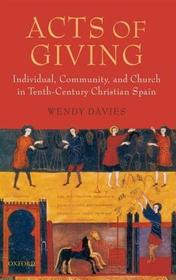
Acts of Giving
Individual, Community, and Church in Tenth-Century Christian Spain
-
10% KEDVEZMÉNY?
- A kedvezmény csak az 'Értesítés a kedvenc témákról' hírlevelünk címzettjeinek rendeléseire érvényes.
- Kiadói listaár GBP 105.00
-
50 163 Ft (47 775 Ft + 5% áfa)
Az ár azért becsült, mert a rendelés pillanatában nem lehet pontosan tudni, hogy a beérkezéskor milyen lesz a forint árfolyama az adott termék eredeti devizájához képest. Ha a forint romlana, kissé többet, ha javulna, kissé kevesebbet kell majd fizetnie.
- Kedvezmény(ek) 10% (cc. 5 016 Ft off)
- Kedvezményes ár 45 147 Ft (42 998 Ft + 5% áfa)
Iratkozzon fel most és részesüljön kedvezőbb árainkból!
Feliratkozom
50 163 Ft

Beszerezhetőség
Megrendelésre a kiadó utánnyomja a könyvet. Rendelhető, de a szokásosnál kicsit lassabban érkezik meg.
Why don't you give exact delivery time?
A beszerzés időigényét az eddigi tapasztalatokra alapozva adjuk meg. Azért becsült, mert a terméket külföldről hozzuk be, így a kiadó kiszolgálásának pillanatnyi gyorsaságától is függ. A megadottnál gyorsabb és lassabb szállítás is elképzelhető, de mindent megteszünk, hogy Ön a lehető leghamarabb jusson hozzá a termékhez.
A termék adatai:
- Kiadó OUP Oxford
- Megjelenés dátuma 2007. november 1.
- ISBN 9780199283408
- Kötéstípus Keménykötés
- Terjedelem260 oldal
- Méret 223x143x18 mm
- Súly 490 g
- Nyelv angol
- Illusztrációk 21 in-text halftone and line illustrations 0
Kategóriák
Rövid leírás:
Acts of Giving examines issues surrounding donation-the giving of property, particularly landed property-in northern Spain during the tenth century. Exploring the place of giving within a broad complex of social and economic concerns, Wendy Davies highlights the centrality of Spain to some of the core themes of medieval European history.
TöbbHosszú leírás:
Acts of Giving examines the issues surrounding donation - the giving of property, usually landed property - in northern 'Christian' Spain in the tenth century, when written texts became very plentiful, allowing us to glimpse the working of local society.
Wendy Davies explores who gives and who receives; what is given; reasons for giving; and the place of giving within the complex of social and economic relationships in society as a whole. People gave land for all kinds of reasons - because they were forced to do so, to meet debts or pay fines; because they wanted to gain material benefits in life, or to secure support in the short term or in old age. Giving pro anima, for the sake of the soul, was relatively limited; and gifts were made to lay persons as well as to the church. Family interests were strongly sustained across the tenth century and did not dwindle; family land was split and re-assembled, not fragmented. The gender and status of donors are key themes, along with commemoration: more men than women took steps to memorialize, in contrast to some parts of western Europe, and more aristocrats than peasants, which is less of a contrast. Donation as a type of transaction is also examined, as well as the insights into status afforded by the language and form of the records. Buying and selling, giving and receiving continued in the tenth-century as it had for centuries. However this period saw the volume of peasant donation to the church increasing enormously. It was this which set the conditions for substantial social and economic change.
...a gem of a book...a maserful demonstration of the art of reading medieval chapters...an important contribution to a transregional study of early medieval Christian Iberia; and an object lesson in the rewards to br gained when an accomplished scholar of one region sets out to explore another.
Tartalomjegyzék:
Setting the Scene
Land and People
History
San Pedro and Santa Comba: churches and their proprietors
Dividing and sharing property
The language of donation
Donation to churches: purpose and expectations
Gesmira, Recosinda, and Nuño Sarracíniz: donation to lay persons
Men and women
Peasant society
Rhetoric and action
Bibliography

