

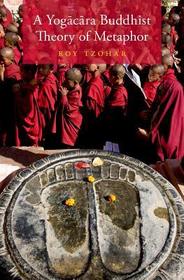
A Yog?c?ra Buddhist Theory of Metaphor
-
10% KEDVEZMÉNY?
- A kedvezmény csak az 'Értesítés a kedvenc témákról' hírlevelünk címzettjeinek rendeléseire érvényes.
- Kiadói listaár GBP 115.00
-
51 922 Ft (49 450 Ft + 5% áfa)
Az ár azért becsült, mert a rendelés pillanatában nem lehet pontosan tudni, hogy a beérkezéskor milyen lesz a forint árfolyama az adott termék eredeti devizájához képest. Ha a forint romlana, kissé többet, ha javulna, kissé kevesebbet kell majd fizetnie.
- Kedvezmény(ek) 10% (cc. 5 192 Ft off)
- Kedvezményes ár 46 730 Ft (44 505 Ft + 5% áfa)
Iratkozzon fel most és részesüljön kedvezőbb árainkból!
Feliratkozom
51 922 Ft

Beszerezhetőség
Megrendelésre a kiadó utánnyomja a könyvet. Rendelhető, de a szokásosnál kicsit lassabban érkezik meg.
Why don't you give exact delivery time?
A beszerzés időigényét az eddigi tapasztalatokra alapozva adjuk meg. Azért becsült, mert a terméket külföldről hozzuk be, így a kiadó kiszolgálásának pillanatnyi gyorsaságától is függ. A megadottnál gyorsabb és lassabb szállítás is elképzelhető, de mindent megteszünk, hogy Ön a lehető leghamarabb jusson hozzá a termékhez.
A termék adatai:
- Kiadó OUP USA
- Megjelenés dátuma 2018. május 31.
- ISBN 9780190664398
- Kötéstípus Keménykötés
- Terjedelem296 oldal
- Méret 157x239x22 mm
- Súly 499 g
- Nyelv angol 0
Kategóriák
Rövid leírás:
The Yogacara school of Buddhist thought claims that all language-use is metaphorical. Exploring the profound implications of this assertion, Roy Tzhoar makes the case for viewing the Yogacara account as a full-fledged theory of meaning, one that is not merely linguistic, but also applicable both in the world and in texts.
TöbbHosszú leírás:
Buddhist philosophy is fundamentally ambivalent toward language. Language is paradoxically seen as both obstructive and necessary for liberation. In this book, Roy Tzohar delves into the ingenious response to this tension from the Yog?c?ra school of Indian Buddhism: that all language-use is metaphorical. Exploring the profound implications of this claim, Tzohar makes the case for viewing the Yog?c?ra account as a full-fledged theory of meaning, one that is not merely linguistic, but also applicable both in the world as well as in texts.
Despite the overwhelming visibility of figurative language in Buddhist philosophical texts, this is the first sustained and systematic attempt to present an indigenous Buddhist theory of metaphor. By grounding the Yog?c?ra pan-metaphorical claim in a broader intellectual context, of both Buddhist and non-Buddhist schools, the book uncovers an intense philosophical conversation about metaphor and language that reaches across sectarian lines. Tzohar's analysis radically reframes the Yog?c?ra controversy with the Madhyamaka school of philosophy, sheds light on the Yog?c?ra application of particular metaphors, and explicates the school's unique understanding of experience.
The content of this book is well structured, while the writing is succinct and erudite. This is a seminal work in the study of YogÄcÄra thought, as well as an important addition to the fields of Indian philosophy, philosophy of language, and, more broadly, in Buddhist studies.
Tartalomjegyzék:
Acknowledgments
Abbreviations
Introduction
1. What do Buddhists have to say on figurative language?
2. A bit of methodology: on determining the relevant textual field and handling intertextual-borrowing.
3. An Outline
PART 1
Chapter I
Metaphor as Absence:
The case of the Early Nyaya and Mimamsa.
Chapter II
Metaphor as Perceptual Illusion:
Figurative Meaning in Bhartrhari's Vakyapadiya
PART 2
Chapter III
It's a Bear... No, It's a Man... No, it's a Metaphor!
Asanga on the Proliferation of Figures
Chapter IV
The Seeds of the Pan-Figurative View:
Metaphor in Other Buddhist Sources
PART 3
Chapter V
What It All Comes Down To:
Sthiramati's Pan-Metaphorical Claim and Its Implications
Chapter VI
Conversing With a Buddha:
The Yogacara Conception of Linguistic and Perceptual Meaning
as a Means for Overcoming Incommensurability
Conclusion:
The Alterity of Metaphor
Appendix A:
Translation and exposition of Vakyapadiya 2.250-256
Appendix B:
A Running translation of the Vakyapadiya 2.285-2.297
References
Index

