

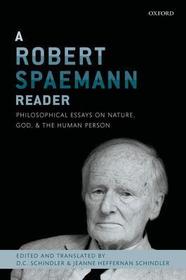
A Robert Spaemann Reader
Philosophical Essays on Nature, God, and the Human Person
-
10% KEDVEZMÉNY?
- A kedvezmény csak az 'Értesítés a kedvenc témákról' hírlevelünk címzettjeinek rendeléseire érvényes.
- Kiadói listaár GBP 135.00
-
60 952 Ft (58 050 Ft + 5% áfa)
Az ár azért becsült, mert a rendelés pillanatában nem lehet pontosan tudni, hogy a beérkezéskor milyen lesz a forint árfolyama az adott termék eredeti devizájához képest. Ha a forint romlana, kissé többet, ha javulna, kissé kevesebbet kell majd fizetnie.
- Kedvezmény(ek) 10% (cc. 6 095 Ft off)
- Kedvezményes ár 54 857 Ft (52 245 Ft + 5% áfa)
Iratkozzon fel most és részesüljön kedvezőbb árainkból!
Feliratkozom
60 952 Ft

Beszerezhetőség
Megrendelésre a kiadó utánnyomja a könyvet. Rendelhető, de a szokásosnál kicsit lassabban érkezik meg.
Why don't you give exact delivery time?
A beszerzés időigényét az eddigi tapasztalatokra alapozva adjuk meg. Azért becsült, mert a terméket külföldről hozzuk be, így a kiadó kiszolgálásának pillanatnyi gyorsaságától is függ. A megadottnál gyorsabb és lassabb szállítás is elképzelhető, de mindent megteszünk, hogy Ön a lehető leghamarabb jusson hozzá a termékhez.
A termék adatai:
- Kiadó OUP Oxford
- Megjelenés dátuma 2015. szeptember 3.
- ISBN 9780199688050
- Kötéstípus Keménykötés
- Terjedelem250 oldal
- Méret 241x164x21 mm
- Súly 544 g
- Nyelv angol 0
Kategóriák
Rövid leírás:
This collection of translated essays by the German philosopher, Robert Spaemann, illustrates the breadth of Spaemann's thinking with essays on intellectual history, metaphysics, political theory, moral theology, and pedagogy.
TöbbHosszú leírás:
The German philosopher Robert Spaemann is one of the most important living thinkers in Europe today. This volume presents a selection of essays that span his career, from his first published academic essay on the origin of sociology (1953) to his more recent work in anthropology and the philosophy of religion. Spaemann is best known for his work on topical questions in ethics, politics, and education, but the light he casts on these questions derives from his more fundamental studies in metaphysics, the philosophy of nature, anthropology, and the philosophy of religion. At the core of the essays contained in this book is the concept of nature and the notion of the human person. Both are best understood, according to Spaemann, in light of the metaphysics and anthropology found in the classical and Christian tradition, which provides an account of the intelligibility and integrity of things and beings in the world that safeguards their value against the modern threat of reductionism and fragmentation. A Robert Spaemann Reader shows that Spaemann's profound intellectual formation in this tradition yields penetrating insights into a wide range of subjects, including God, education, art, human action, freedom, evolution, politics, and human dignity.
Spaemann tends, admittedly, to write in a more exploratory, historicizing and dialectical way than is the norm in Anglophone philosophy. But this style masks, I believe, a highly integrated and rigorous vision-a vision well conveyed by this engrossing, erudite and long-overdue volume.
Tartalomjegyzék:
Introduction
A Philosophical Autobiography (1983)
Nature (1973)
The Traditionalist Error: On the Sociologization of the Idea of God in the 19th Century (1953)
Bourgeois Ethics and Non-Teleological Ontology (1963)
From the Polis to Nature: The Controversy Surrounding Rousseau's First Discourse (1973)
In Defense of Anthropomorphism (2008)
On Human Dignity (1985)
Education as an Introduction to Reality: A Speech Commemorating the Anniversary of a Children's Home (1988)
What Does It Mean to be Cultured? (1995)
Natural Existence and Political Existence in Rousseau (1965)
Individual Actions (2000)
Being and Coming to Be: What Does the Theory of Evolution Explain? (1984)
The Meaning of the 'Sum' in the 'Cogito Sum' (1987)
The Undying Rumor: The God Question and the Modern Delusion (2007)
What Does It Mean to Say that 'Art Imitates Nature'? (2007)
The End of Modernity? (1986)

