

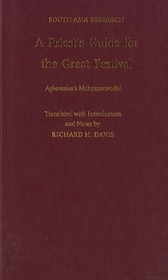
A Priest's Guide for the Great Festival Aghorasiva's Mahotsavavidhi
Sorozatcím: South Asia Research;
-
10% KEDVEZMÉNY?
- A kedvezmény csak az 'Értesítés a kedvenc témákról' hírlevelünk címzettjeinek rendeléseire érvényes.
- Kiadói listaár GBP 76.00
-
36 309 Ft (34 580 Ft + 5% áfa)
Az ár azért becsült, mert a rendelés pillanatában nem lehet pontosan tudni, hogy a beérkezéskor milyen lesz a forint árfolyama az adott termék eredeti devizájához képest. Ha a forint romlana, kissé többet, ha javulna, kissé kevesebbet kell majd fizetnie.
- Kedvezmény(ek) 10% (cc. 3 631 Ft off)
- Kedvezményes ár 32 678 Ft (31 122 Ft + 5% áfa)
Iratkozzon fel most és részesüljön kedvezőbb árainkból!
Feliratkozom
36 309 Ft

Beszerezhetőség
Megrendelésre a kiadó utánnyomja a könyvet. Rendelhető, de a szokásosnál kicsit lassabban érkezik meg.
Why don't you give exact delivery time?
A beszerzés időigényét az eddigi tapasztalatokra alapozva adjuk meg. Azért becsült, mert a terméket külföldről hozzuk be, így a kiadó kiszolgálásának pillanatnyi gyorsaságától is függ. A megadottnál gyorsabb és lassabb szállítás is elképzelhető, de mindent megteszünk, hogy Ön a lehető leghamarabb jusson hozzá a termékhez.
A termék adatai:
- Kiadó OUP USA
- Megjelenés dátuma 2010. február 4.
- ISBN 9780195378528
- Kötéstípus Keménykötés
- Terjedelem208 oldal
- Méret 160x236x20 mm
- Súly 425 g
- Nyelv angol
- Illusztrációk 6 black and white line illustrations 0
Kategóriák
Rövid leírás:
The Mahotsavavidhi, a twelfth-century Sanskrit text, provides detailed guidelines for a Saiva temple priest in performing a nine-day "great festival" for the god Siva. Although there have been numerous studies of temple festivals and processions based on ethnographic observations and on recent historical data, the historical study of this dramatic religious practice during earlier periods has relied on speculation. The first translation into a European language of any medieval work on temple festivals, Davis's groundbreaking volume will provide a new foundation for the study of the history of South Indian temple festivals as a cultural practice.
TöbbHosszú leírás:
The Mahotsavavidhi, a twelfth-century Sanskrit text, provides detailed guidelines for a Saiva temple priest in performing a nine-day "great festival" for the god Siva. The author, Aghorasiva, is one of the most esteemed and influential authors in the Saiva Siddhanta school, and his lengthy work on ritual procedures, Kriyakramadyotika, (of which the Mahotsavavidhi is a part), is by all accounts the Agama work most employed by modern temple priests and pious Saivas in their practice of worship. Richard Davis's translation of this important text is the first translation into a European language of any medieval work on temple festivals. Because the text was intended for an expert audience of working twelfth-century priests, Aghorasiva employs a highly technical idiom. For that reason, Davis annotates his translation extensively with explanations and expansions drawn from other Agama works. There have been numerous studies of temple festivals and processions based on ethnographic observations and on recent historical data, but the historical study of this dramatic religious practice during earlier periods has relied on speculation. Davis's groundbreaking volume will provide a new foundation for the study of the history of South Indian temple festivals as a cultural practice.
. . . Davis precedes the translation with with an extensive introductory overview of the text and the rituals it prescribes. . . The introduction constitutes an excellent and accessible discussion of the temple culture of twelfth-century Tamilnad that will be essential reading for all scholars and students of medieval temple Hinduism.
Tartalomjegyzék:
Acknowledgments
Table of Contents
List of Abbreviations
List of Tables and Diagrams
Notes on Text, Author and Translation
Introduction
Translation
References
Tables and Diagrams
Text (in devanagari)

