

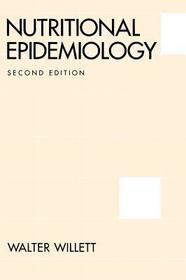
Nutritional Epidemiology
Series: Monographs in Epidemiology and Biostatistics; 30;
- Publisher's listprice GBP 46.00
-
20 769 Ft (19 780 Ft + 5% VAT)
The price is estimated because at the time of ordering we do not know what conversion rates will apply to HUF / product currency when the book arrives. In case HUF is weaker, the price increases slightly, in case HUF is stronger, the price goes lower slightly.
- Discount 10% (cc. 2 077 Ft off)
- Discounted price 18 692 Ft (17 802 Ft + 5% VAT)
Subcribe now and take benefit of a favourable price.
Subscribe
20 769 Ft

Availability
Uncertain availability. Please turn to our customer service.
Why don't you give exact delivery time?
Delivery time is estimated on our previous experiences. We give estimations only, because we order from outside Hungary, and the delivery time mainly depends on how quickly the publisher supplies the book. Faster or slower deliveries both happen, but we do our best to supply as quickly as possible.
Product details:
- Edition number 2
- Publisher OUP USA
- Date of Publication 23 July 1998
- ISBN 9780195122978
- Binding Hardback
- No. of pages528 pages
- Size 260x186x28 mm
- Weight 1060 g
- Language English
- Illustrations numerous figures and tables 0
Categories
Short description:
Widely praised and widely used in its first edition, published in 1990, this text has been heavily revised, expanded and updated to take account of progress in nutritional epidemiology. Among many other changes, three new chapters have been added to the second edition: Issues in Analysis and Presentation of Dietary Data, Nutrition Monitoring and Surveillance, and Folic Acid and Neural Tube Defects. The book continues to emphasize methods of dietary assessment, their reproducibility
and validity, and the implications of measurement error. Integrating knowledge and research approaches from epidemiology and nutrition, it will be particularly useful to graduate students in both fields.
Long description:
This guide is intended for those who wish to understand the complex relationships between diet and the major diseases of western civilization, such as cancer and atherosclerosis. It is aimed both at researchers engaged in the unraveling of these complex associations and at readers of the rapidly multiplying and often confusing scholarly literature on the subject.
The author starts with an overview of research strategies in nutritional epidemiology--a relatively new discipline which combines the knowledge compiled by nutritionists during this century with the methodology developed by epidemiologists to study the determinants of disease with multiple etiologies and long latent periods. A major part of the book is devoted to methods of dietary assessment using data on food intake, biochemical indicators of diet, and measures of body size and composition.
The reproducibility and validity of each approach and the implications of measurement error are considered in detail. The analysis, presentation, and interpretation of data from epidemiologic studies of diet and disease are discussed. Particular attention is paid to the important influence of total
energy intake on findings in such studies. As examples of methodologic issues in nutritional epidemiology, three substantive topics are examined in depth: the relations of diet and coronary heart disease, fat intake and breast cancer, and Vitamin A and lung cancer. This volume will benefit epidemiologists, nutritionists, dietitians, policy makers, public health practitioners, cancer researchers and oncologists, and cardiovascular specialists.
Table of Contents:
Overview of Nutritional Epidemiology
Foods and Nutrients
Nature of Variation in Diet
24-Hour Dietary Recall and Food Record Methods
Food Frequency Methods
Reproducibility and Validity of Food-Frequency Questionnaires
Recall of Remote Diet
Surrogate Sources of Dietary Information
Biochemical Indicators of Dietary Intake
Anthropometric Measures and Body Composition
Implications of Total Energy Intake for Epidemiologic Analysis
Correction for the Effects of Measurement Error
Issues in Analysis and Presentation of Dietary Data
Nutrition Monitoring and Surveillance
Vitamin A and Lung Cancer
Dietary Fat and Breast Cancer
Diet and Coronary Heart Disease
Folic Acid and Neural Tube Defects
Future Research Directions
Bibliography
Index

