

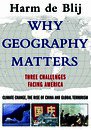
Why Geography Matters
Three Challenges Facing America: Climate Change, the Rise of China, and Global Terrorism
-
10% KEDVEZMÉNY?
- A kedvezmény csak az 'Értesítés a kedvenc témákról' hírlevelünk címzettjeinek rendeléseire érvényes.
- Kiadói listaár GBP 15.99
-
7 219 Ft (6 875 Ft + 5% áfa)
Az ár azért becsült, mert a rendelés pillanatában nem lehet pontosan tudni, hogy a beérkezéskor milyen lesz a forint árfolyama az adott termék eredeti devizájához képest. Ha a forint romlana, kissé többet, ha javulna, kissé kevesebbet kell majd fizetnie.
- Kedvezmény(ek) 10% (cc. 722 Ft off)
- Kedvezményes ár 6 497 Ft (6 188 Ft + 5% áfa)
Iratkozzon fel most és részesüljön kedvezőbb árainkból!
Feliratkozom
7 219 Ft

Beszerezhetőség
A kiadónál véglegesen elfogyott, nem rendelhető. Érdemes újra keresni a címmel, hátha van újabb kiadás.
Why don't you give exact delivery time?
A beszerzés időigényét az eddigi tapasztalatokra alapozva adjuk meg. Azért becsült, mert a terméket külföldről hozzuk be, így a kiadó kiszolgálásának pillanatnyi gyorsaságától is függ. A megadottnál gyorsabb és lassabb szállítás is elképzelhető, de mindent megteszünk, hogy Ön a lehető leghamarabb jusson hozzá a termékhez.
A termék adatai:
- Kiadó Oxford University Press
- Megjelenés dátuma 2006. március 23.
- ISBN 9780195183016
- Kötéstípus Keménykötés
- Terjedelem320 oldal
- Méret 234x156x28 mm
- Súly 624 g
- Nyelv angol
- Illusztrációk 47 maps & charts 0
Kategóriák
Rövid leírás:
In 12 insightful, personalised chapters, Harm de Blij discusses the spatial consequences of topics such as Africa's formative disasters, Russia's troubling prospects, the emergence of a European superpower, and global terrorism. Outlining the geographic factors that affect global change, he reveals the connections between history, politics, and science, offering a timely diagnosis of the direction the world is heading at the beginning of a new century.
TöbbHosszú leírás:
Over the next half century, the human population, divided by culture and economics and armed with weapons of mass destruction, will expand to nearly 9 billion people. Abrupt climate change may throw the global system into chaos; China will emerge as a superpower; and Islamic terrorism and insurgency will threaten vital American interests. How can we understand these and other global challenges? Harm de Blij has a simple answer: by improving our understanding of the world's
geography.
De Blij demonstrates how geography's perspectives yield unique and penetrating insights into the interconnections that mark our shrinking world. Centuries ago a surge of climate change halted China's maritime plans; more recently, environmental calamity altered the course of geopolitical events in East Asia; today, terrorists look for failed and malfunctioning states to base their operations--and some of these are in our own hemisphere.
Preparing for climate change, averting a cold war with China, defeating terrorism: all of this requires geographic knowledge. In Why Geography Matters, de Blij makes an urgent call to restore geography to America's educational curriculum. He shows how and why the U.S. has become the world's most geographically illiterate society of consequence--and demonstrates that this geographic illiteracy is a direct risk to America's national security.
In this personal and engaging book, de Blij provides a geographer's perspective on the challenges of this new century. As he states, "We are crossing the threshold to a century that will witness massive environmental change, major population shifts, persistent civilizational conflicts [and] while geographic knowledge by itself cannot solve these problems, they will not be effectively approached without it."

