
• Kapcsolat

  • Hírlevél

  • Rólunk

  • Szállítási lehetőségek

  • Prospero könyvpiaci podcast

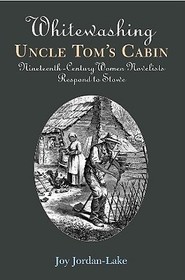
  • Whitewashing Uncle Tom`s Cabin – Nineteenth–Century Women Novelists Respond to Stowe: Nineteenth-Century Women Novelists Respond to Stowe

    Whitewashing Uncle Tom`s Cabin – Nineteenth–Century Women Novelists Respond to Stowe by Jordan–lake, Joy;

    Nineteenth-Century Women Novelists Respond to Stowe

      • 10% KEDVEZMÉNY?

      • A kedvezmény csak az 'Értesítés a kedvenc témákról' hírlevelünk címzettjeinek rendeléseire érvényes.
      • Kiadói listaár GBP 80.00
      • Az ár azért becsült, mert a rendelés pillanatában nem lehet pontosan tudni, hogy a beérkezéskor milyen lesz a forint árfolyama az adott termék eredeti devizájához képest. Ha a forint romlana, kissé többet, ha javulna, kissé kevesebbet kell majd fizetnie.

        38 220 Ft (36 400 Ft + 5% áfa)
      • Kedvezmény(ek) 10% (cc. 3 822 Ft off)
      • Kedvezményes ár 34 398 Ft (32 760 Ft + 5% áfa)

    38 220 Ft

    db

    Beszerezhetőség

    Még nem jelent meg, de rendelhető. A megjelenéstől számított néhány héten belül megérkezik.

    Why don't you give exact delivery time?

    A beszerzés időigényét az eddigi tapasztalatokra alapozva adjuk meg. Azért becsült, mert a terméket külföldről hozzuk be, így a kiadó kiszolgálásának pillanatnyi gyorsaságától is függ. A megadottnál gyorsabb és lassabb szállítás is elképzelhető, de mindent megteszünk, hogy Ön a lehető leghamarabb jusson hozzá a termékhez.

    A termék adatai:

    • Kiadó University of Chicago Press
    • Megjelenés dátuma 2026. március 25.
    • Kötetek száma Hardback

    • ISBN 9780826514752
    • Kötéstípus Keménykötés
    • Lásd még 9780826514769
    • Terjedelem232 oldal
    • Méret 228x152 mm
    • Súly 333 g
    • Nyelv angol
    • Illusztrációk Illustrations
    • 700

    Kategóriák

    Rövid leírás:

    Few books have had more impact on US history than ""Uncle Tom's Cabin"". Slavery apologists from North and South responded with their own fiction, a key portion written by women. Joy Jordan-Lake examines those women-authored novels to produce insights into both antebellum American culture and a proslavery ideology rife with internal tensions.

    Több

    Hosszú leírás:

    Few books have had more impact on U.S. history than Harriet Beecher Stowe's Uncle Tom's Cabin. The first American novel to sell more than a million copies, it provoked an entire reading public to extol it, debate it, weep over it, excoriate it. Fighting fire with fire, slavery apologists from North and South responded with their own fiction, producing over three dozen novels in direct response to Stowe's work. Interestingly, a key portion of that fiction was written by women. In Whitewashing Uncle Tom's Cabin, Joy Jordan-Lake examines those women-authored novels to produce compelling insights into both antebellum American culture and a proslavery ideology rife with internal tensions. Jordan-Lake begins by considering the male plantation literary tradition and then demonstrates how white women novelists of the anti-Uncle Tom school adopted characteristics from sentimental fiction, emulating Stowe's own strategies more than those of their male allies. Like Stowe, these women writers tried to appeal to maternal sensibilities and offered motherhood as a means of redemption for an admittedly fallen society. But contrary to their intent, Jordan-Lake shows, their works succumb to evasions, displacements, and contradictions that disrupt their surface narratives and reveal even their most noble women characters as mere pawns in a patriarchal game in which white society's pursuit and maintenance of wealth are made to appear humane, even holy. Ultimately, these texts dismantie themselves to expose a profit-driven chattel slavery as savage as any envisioned by Stowe. Including a discussion of twentieth- and twenty-first-century novels that revisit plantation mythology, Whitewashing Uncle Tom's Cabin casts new light on the ethical and moral disaster of securing one group's economic strength at the expense of other groups' access to dignity, compassion, and justice.

    Több
    0