

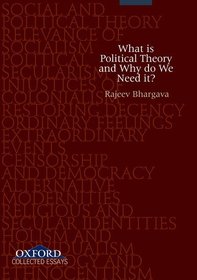
What is Political Theory and Why Do We Need It?
Sorozatcím: Collected Essays;
-
10% KEDVEZMÉNY?
- A kedvezmény csak az 'Értesítés a kedvenc témákról' hírlevelünk címzettjeinek rendeléseire érvényes.
- Kiadói listaár GBP 26.99
-
12 185 Ft (11 605 Ft + 5% áfa)
Az ár azért becsült, mert a rendelés pillanatában nem lehet pontosan tudni, hogy a beérkezéskor milyen lesz a forint árfolyama az adott termék eredeti devizájához képest. Ha a forint romlana, kissé többet, ha javulna, kissé kevesebbet kell majd fizetnie.
- Kedvezmény(ek) 10% (cc. 1 219 Ft off)
- Kedvezményes ár 10 967 Ft (10 445 Ft + 5% áfa)
Iratkozzon fel most és részesüljön kedvezőbb árainkból!
Feliratkozom
12 185 Ft

Beszerezhetőség
A kiadónál véglegesen elfogyott, nem rendelhető. Érdemes újra keresni a címmel, hátha van újabb kiadás.
Why don't you give exact delivery time?
A beszerzés időigényét az eddigi tapasztalatokra alapozva adjuk meg. Azért becsült, mert a terméket külföldről hozzuk be, így a kiadó kiszolgálásának pillanatnyi gyorsaságától is függ. A megadottnál gyorsabb és lassabb szállítás is elképzelhető, de mindent megteszünk, hogy Ön a lehető leghamarabb jusson hozzá a termékhez.
A termék adatai:
- Kiadó Oxford University Press
- Megjelenés dátuma 2010. február 4.
- ISBN 9780195699333
- Kötéstípus Keménykötés
- Terjedelem422 oldal
- Méret 226x150x30 mm
- Súly 665 g
- Nyelv angol 0
Kategóriák
Rövid leírás:
This collection of essays raises and answers important questions on political theory - What is its relevance in our times? What is it meant to do? How is it different from other forms of theoretical enquiries? According to the author, the aim of political theory is to reason systematically and ethically about major social and political problems.
TöbbHosszú leírás:
In this collection of essays, Bhargava answers important questions related to Political Theory and its aims. The aim of political theory, he says, is not only to clear up conceptual muddles but to reason systematically and ethically about some of the major social and political problems we face, to illuminate which ethical values are relevant to the context and why, and to give some direction to what we should do. Using the tools of political theory, he tells us the value and
dangers of multiculturalism, the significance of political secularism in religiously diverse societies, the continuing relevance of some socialist ideas and explains why modernity must not be viewed only as a monolithic, homogenizing process.
He asks what, if any, the cultural injustices of colonialism are and how we should respond to them, assesses the value of institutions such as Truth and Reconciliation in societies that have gone through violence and injustice on a massive scale, argues why it is urgent to jettison stereotypes of one another held by religious and secular persons, clarifies the importance of free expression in democratic societies, and how the state should act amidst growing intolerance and offers a morally
complex reflection on 9/11. The book also includes philosophical essays on the methodology of social science.

