

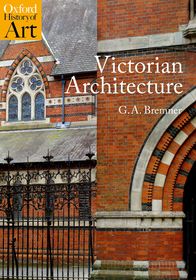
Victorian Architecture
Sorozatcím: Oxford History of Art;
-
10% KEDVEZMÉNY?
- A kedvezmény csak az 'Értesítés a kedvenc témákról' hírlevelünk címzettjeinek rendeléseire érvényes.
- Kiadói listaár GBP 24.99
-
11 282 Ft (10 745 Ft + 5% áfa)
Az ár azért becsült, mert a rendelés pillanatában nem lehet pontosan tudni, hogy a beérkezéskor milyen lesz a forint árfolyama az adott termék eredeti devizájához képest. Ha a forint romlana, kissé többet, ha javulna, kissé kevesebbet kell majd fizetnie.
- Kedvezmény(ek) 10% (cc. 1 128 Ft off)
- Kedvezményes ár 10 154 Ft (9 671 Ft + 5% áfa)
Iratkozzon fel most és részesüljön kedvezőbb árainkból!
Feliratkozom
11 282 Ft

Beszerezhetőség
Becsült beszerzési idő: A Prosperónál jelenleg nincsen raktáron, de a kiadónál igen. Beszerzés kb. 3-5 hét..
A Prosperónál jelenleg nincsen raktáron.
Why don't you give exact delivery time?
A beszerzés időigényét az eddigi tapasztalatokra alapozva adjuk meg. Azért becsült, mert a terméket külföldről hozzuk be, így a kiadó kiszolgálásának pillanatnyi gyorsaságától is függ. A megadottnál gyorsabb és lassabb szállítás is elképzelhető, de mindent megteszünk, hogy Ön a lehető leghamarabb jusson hozzá a termékhez.
A termék adatai:
- Kiadó OUP Oxford
- Megjelenés dátuma 2026. március 26.
- ISBN 9780198835394
- Kötéstípus Puhakötés
- Terjedelem400 oldal
- Méret 240x170x23 mm
- Súly 924 g
- Nyelv angol 690
Kategóriák
Rövid leírás:
A new, concise history of buildings erected all over Britain and its colonial empire during the long nineteenth century. Thematically arranged, the book covers all major typologies, from civic buildings and religious structures, to correctional facilities, museums, and exhibition spaces, including transport and industrial infrastructures.
TöbbHosszú leírás:
Victorian Architecture presents a new and refreshing overview of nineteenth- and early twentieth-century architecture in Britain and the wider British world.
The Victorian period witnessed the beginnings of what today would be described as the global architectural practice. Architects inhabiting this world, or designing for it, were creating new and hybrid forms of Victorian architecture, continuously, in multiple locations. New efficiencies brought by technological advancements such as steam-powered locomotion enabled the Victorian building industry to revolutionise in terms of scale, precision, and variety. As many of the buildings examined here reveal, at the foundation of this revolution was a significant transformation in the supply and conversion of energy. Materials used in construction often come from far away and were procured under increasingly mechanised conditions, entailing the consumption of fossil-fuels in huge, unprecedented quantities. Markets for these materials also multiplied during the period, with companies producing and exporting products as diverse as cast-iron, encaustic tiles, and stained glass in large quantities. Even whole buildings were packed and shipped abroad.
Victorian Architecture presents a new and refreshing overview of nineteenth- and early twentieth-century architecture in Britain and the wider British world. Thematically structured, it highlights concerns fundamental to how Victorians experienced their world, including urbanism, industry, government, faith, empire, modernity, social order, family, collecting, and consumerism. In emphasising important concepts in building design and culture, it thus connects the understanding of architecture to its wider social, political, and economic contexts. A key feature of the book is the way it situates British architecture in its extended global geographies, with the Victorian built environment seen as encompassing Britain's colonial expansion. As people and ideas were increasingly mobile during this period, themes such as speed and movement are brought to the fore. British architects were designing buildings not just in the British Isles, but much farther afield, in lands as far apart as Barbados and Bombay, Newfoundland and New South Wales. Concise and visually attractive, Victorian Architecture is aimed at a student and general-reader audience, as well as providing a useful reference point for professional scholars.
Tartalomjegyzék:
Introduction
Steam and Speed: Industry, Infrastructure, and the City
Material Abundance: Energy and the New Building Ecology
The Quest for Modernity: Theory and Style
Building the State: Architectures of Power and Pride
New Jerusalems: Fabricating Faith in the Victorian World
Correction, Reform, Discipline: Shaping Institutional Architectures
The World on Show: Exhibitions, Museums, and Cultures of Display
Habits and Mores: Domesticity and the Victorian House

