

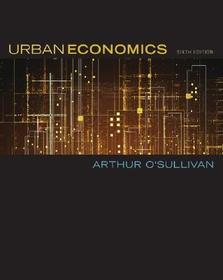
Urban Economics
-
10% KEDVEZMÉNY?
- A kedvezmény csak az 'Értesítés a kedvenc témákról' hírlevelünk címzettjeinek rendeléseire érvényes.
- Kiadói listaár GBP 131.99
-
59 593 Ft (56 755 Ft + 5% áfa)
Az ár azért becsült, mert a rendelés pillanatában nem lehet pontosan tudni, hogy a beérkezéskor milyen lesz a forint árfolyama az adott termék eredeti devizájához képest. Ha a forint romlana, kissé többet, ha javulna, kissé kevesebbet kell majd fizetnie.
- Kedvezmény(ek) 10% (cc. 5 959 Ft off)
- Kedvezményes ár 53 633 Ft (51 080 Ft + 5% áfa)
Kedvezményes ár heti hírlevelünkre feliratkozott ügyfeleinknek.
Iratkozzon fel most és részesüljön kedvezőbb árainkból!
Feliratkozom
Iratkozzon fel most és részesüljön kedvezőbb árainkból!
Feliratkozom
59 593 Ft

Beszerezhetőség
A kiadónál véglegesen elfogyott, nem rendelhető. Érdemes újra keresni a címmel, hátha van újabb kiadás.
Why don't you give exact delivery time?
A beszerzés időigényét az eddigi tapasztalatokra alapozva adjuk meg. Azért becsült, mert a terméket külföldről hozzuk be, így a kiadó kiszolgálásának pillanatnyi gyorsaságától is függ. A megadottnál gyorsabb és lassabb szállítás is elképzelhető, de mindent megteszünk, hogy Ön a lehető leghamarabb jusson hozzá a termékhez.
A termék adatai:
- Kiadás sorszáma 6
- Kiadó McGraw-Hill
- Megjelenés dátuma 2006. február 1.
- ISBN 9780072984767
- Kötéstípus Keménykötés
- Terjedelem432 oldal
- Méret 228x177x22 mm
- Súly 794 g
- Nyelv angol 0
Kategóriák
Hosszú leírás:
Arthur O'Sullivan's Urban Economics is the leading text for this small, but exciting market. This book covers urban economics as the discipline that lies at the intersection of geography and economics. The sixth edition is a thorough revision of previous incarnations?the author has reorganized and rewritten every chapter to produce a sleek and up-to-date text that will bring renewed attention to the Urban Economics course.
This sixth edition offers an extreme makeover from previous editions while also incorporating the remarkable progress in the field of urban economics in the last ten to fifteen years. Part I of the book explains why cities exist and what causes them to grow or shrink. Part II examines the market forces that shape cities and the role of government in determining land-use patterns. Part III looks at the urban transportation system, exploring the pricing and design of public transit systems and the externalities associated with automobile use (congestion, environmental damage, collisions). Part IV uses a model of the rational criminal to explore the causes of urban crime and the spatial consequences. Part V explains the unique features of the housing market and examines the effects of government housing policies. The final part of the book explains the rationale for our fragmented system of local government and explores the responses of local governments to intergovernmental grants and the responses of taxpayers to local taxes.
All of the economic concepts used in the book are covered in the typical intermediate microeconomics course, but a Tools of Microeconomics appendix is included that covers the key concepts for students whose exposure to microeconomics is limited to an introductory course or who could benefit from a review of intermediate concepts.
Arthur O'Sullivan's Urban Economics is the leading text for this small, but exciting market. This book covers urban economics as the discipline that lies at the intersection of geography and economics. The sixth edition is a thorough revision of previous incarnations?the author has reorganized and rewritten every chapter to produce a sleek and up-to-date text that will bring renewed attention to the Urban Economics course.
This sixth edition offers an extreme makeover from previous editions while also incorporating the remarkable progress in the field of urban economics in the last ten to fifteen years. Part I of the book explains why cities exist and what causes them to grow or shrink. Part II examines the market forces that shape cities and the role of government in determining land-use patterns. Part III looks at the urban transportation system, exploring the pricing and design of public transit systems and the externalities associated with automobile use (congestion, environmental damage, collisions). Part IV uses a model of the rational criminal to explore the causes of urban crime and the spatial consequences. Part V explains the unique features of the housing market and examines the effects of government housing policies. The final part of the book explains the rationale for our fragmented system of local government and explores the responses of local governments to intergovernmental grants and the responses of taxpayers to local taxes.
All of the economic concepts used in the book are covered in the typical intermediate microeconomics course, but a Tools of Microeconomics appendix is included that covers the key concepts for students whose exposure to microeconomics is limited to an introductory course or who could benefit from a review of intermediate concepts.Több

