

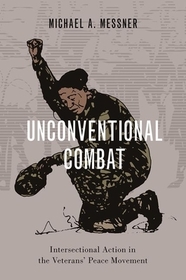
Unconventional Combat
Intersectional Action in the Veterans' Peace Movement
Sorozatcím: Oxford Studies in Culture and Politics;
-
20% KEDVEZMÉNY?
- A kedvezmény csak az 'Értesítés a kedvenc témákról' hírlevelünk címzettjeinek rendeléseire érvényes.
- Kiadói listaár GBP 26.99
-
12 185 Ft (11 605 Ft + 5% áfa)
Az ár azért becsült, mert a rendelés pillanatában nem lehet pontosan tudni, hogy a beérkezéskor milyen lesz a forint árfolyama az adott termék eredeti devizájához képest. Ha a forint romlana, kissé többet, ha javulna, kissé kevesebbet kell majd fizetnie.
- Kedvezmény(ek) 20% (cc. 2 437 Ft off)
- Kedvezményes ár 9 748 Ft (9 284 Ft + 5% áfa)
- A kedvezmény érvényes eddig: 2026. június 30.
Iratkozzon fel most és részesüljön kedvezőbb árainkból!
Feliratkozom
12 185 Ft

Beszerezhetőség
Becsült beszerzési idő: A Prosperónál jelenleg nincsen raktáron, de a kiadónál igen. Beszerzés kb. 3-5 hét..
A Prosperónál jelenleg nincsen raktáron.
Why don't you give exact delivery time?
A beszerzés időigényét az eddigi tapasztalatokra alapozva adjuk meg. Azért becsült, mert a terméket külföldről hozzuk be, így a kiadó kiszolgálásának pillanatnyi gyorsaságától is függ. A megadottnál gyorsabb és lassabb szállítás is elképzelhető, de mindent megteszünk, hogy Ön a lehető leghamarabb jusson hozzá a termékhez.
A termék adatai:
- Kiadó OUP USA
- Megjelenés dátuma 2021. szeptember 30.
- ISBN 9780197573648
- Kötéstípus Puhakötés
- Terjedelem192 oldal
- Méret 152x231x10 mm
- Súly 295 g
- Nyelv angol
- Illusztrációk 12 b&w photographs 142
Kategóriák
Rövid leírás:
In Unconventional Combat, Michael A. Messner illuminates the current generational transformation of the US veterans' peace movement, from one grounded mostly in the experiences of older, White men of the Vietnam War era, to one increasingly driven by a young, diverse cohort of post-9/11 veterans. In particular, he focuses on six veterans of color--mostly women who identify as queer--to show how their experiences of sexual and gender harassment, sexual assault, racist and homophobic abuse during their military service shapes their efforts to transform the veterans' peace movement.
TöbbHosszú leírás:
In recent decades, there has been a generational shift of the US veterans' peace movement, from one grounded mostly in the experiences of older white men of the Vietnam War era, to one informed by a young, diverse cohort of post-9/11 veterans. In Unconventional Combat, Michael A. Messner traces this transformation through the life-history interviews of six veterans of color to show how their experiences of sexual and gender harassment, sexual assault, racist and homophobic abuse during their military service has shaped their political views and action. Drawing upon participant observation with the Veterans For Peace and About Face organizations and interviews with older male veterans as his backdrop, Messner shows how veterans' military experiences form their collective "situated knowledge" of intersecting oppressions. This knowledge, Messner argues, further shapes their intersectional praxis, which promises to transform the veterans' peace movement and potentially link their anti-militarist work with other movement groups working for change. As intersectionality has increasingly become central to the conversation on social movements, Unconventional Combat is not only a story about the US veterans' peace movement, but it also offers broad relevance to the larger world of social justice activism.
(The Book) provide(s) insight into their efforts for peace, racial equality, and the LGBT+ movement.
Tartalomjegyzék:
Prologue
Chapter 1: Action at intersections: Wars, militarization, and veterans' peace movements
INTERLUDE 1: "It was all men."
Chapter 2: "I was in unconventional combat": Intersectional pathways through the military
INTERLUDE 2: Guys being guys
Chapter 3: "Rip off the band-aid": A new generation confronts the veterans' peace movement
INTERLUDE 3: "We cannot stand in fear"
Chapter 4: "Connecting the dots": From silos to intersectional coalitions
INTERLUDE 4: "Say it, mean it, and do something about it."
Chapter 5: "You've got to do something radical": Intersectional praxis in social movements
Appendix I: Methodological Appendix: Centering Intersectional Standpoints
List of References
Notes
Appendix

