

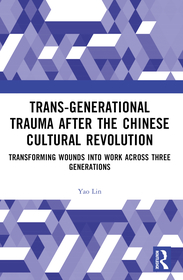
Transcending Shadows
Transforming Generational Wounds Through Three Generations
-
20% KEDVEZMÉNY?
- A kedvezmény csak az 'Értesítés a kedvenc témákról' hírlevelünk címzettjeinek rendeléseire érvényes.
- Kiadói listaár GBP 44.99
-
20 312 Ft (19 345 Ft + 5% áfa)
Az ár azért becsült, mert a rendelés pillanatában nem lehet pontosan tudni, hogy a beérkezéskor milyen lesz a forint árfolyama az adott termék eredeti devizájához képest. Ha a forint romlana, kissé többet, ha javulna, kissé kevesebbet kell majd fizetnie.
- Kedvezmény(ek) 20% (cc. 4 062 Ft off)
- Kedvezményes ár 16 250 Ft (15 476 Ft + 5% áfa)
- A kedvezmény érvényes eddig: 2026. június 30.
Iratkozzon fel most és részesüljön kedvezőbb árainkból!
Feliratkozom
18 281 Ft

Beszerezhetőség
Még nem jelent meg, de rendelhető. A megjelenéstől számított néhány héten belül megérkezik.
Why don't you give exact delivery time?
A beszerzés időigényét az eddigi tapasztalatokra alapozva adjuk meg. Azért becsült, mert a terméket külföldről hozzuk be, így a kiadó kiszolgálásának pillanatnyi gyorsaságától is függ. A megadottnál gyorsabb és lassabb szállítás is elképzelhető, de mindent megteszünk, hogy Ön a lehető leghamarabb jusson hozzá a termékhez.
A termék adatai:
- Kiadás sorszáma 1
- Kiadó Routledge
- Megjelenés dátuma 2026. július 6.
- ISBN 9781032224282
- Kötéstípus Puhakötés
- Terjedelem300 oldal
- Méret 234x156 mm
- Nyelv angol
- Illusztrációk 3 Illustrations, black & white; 3 Line drawings, black & white; 7 Tables, black & white 700
Kategóriák
Rövid leírás:
Based on interviews with three generations of three families, this book clarifies why the Cultural Revolution in China had a uniquely traumatic impact on those affected, and shows the forms this trauma has taken in the lives of their second and third generations at both inter-subjective and intra-psychic levels.
TöbbHosszú leírás:
Based on interviews with three generations of three families, this book clarifies why the Cultural Revolution in China (1966–1976) had a uniquely traumatic impact on those affected, and shows the forms this trauma has taken in the lives of their second and third generations at both inter-subjective and intra-psychic levels.
As a psychoanalytically oriented, qualitative study of the aftermath of the Cultural Revolution, this book investigates the role played by the beliefs, practices, and narratives which were ideologically formative during the Cultural Revolution, showing their role in the trans-generational transmission of trauma and how they still prevent a collective means of dealing with this trauma today. Instead of a collective remembering, a collective repression prevents the symbolization of memory on a societal level, and families serve as a space for this unresolved trauma. In this context, psychoanalysis is shown to be an effective way of interrupting and healing the transmission of trauma across the generations. Within a longer historical framework, this book also explores the Cultural Revolution as a defensive compulsory repetition of the traumas that China had previously experienced on a political and cultural level.
Bearing witness to a personal process of transforming a wound into work, this first-person account offers in-depth understanding and guidance for psychotherapists and psychoanalysts engaged in interrupting and healing the trans-generational transmission of trauma.
'This book on the trans-generational transmission of trauma after a social catastrophe is the best this reviewer has read. It is based on thorough psychoanalytic, qualitative research, it is scholarly written, and it presents a high level of reflection and analysis. It is much-needed now as we see massive traumatization of people in several places around the world. Deep insights into the societal conditions before, during and after the cultural revolution are presented. Traumatization is placed in a historical, societal and cultural context seldom seen in studies on traumatization.
The insights and conclusion are valid for other contexts than the Chinese, such as those we see today in Ukraine, Sudan, and Palestine-Israel.
Yao Lin's book is a profoundly and highly valuable contribution for those who work with traumatized persons and their descendants, and for societies who need to heal historical wounds.'
Sverre Varvin, professor emeritus, Oslo Metropolitan University; training analyst, Norwegian Psychoanalytic Society
'Based on original intergenerational research, Lin's book carefully traces the intimate dimensions of Maoist China's traumatic history. Admirably crafted, Lin's analysis of the discourses of three generations succeeds in highlighting important points and the repetition of patterns that would have remained invisible without the careful collection and analysis of these biographies. Well-written and with the ability to make the very complex Chinese history clear to a non-specialist readership, Lin's work is important in two crucial ways. First, it is important for Chinese society and the Chinese people, to whom this now silenced history belongs. But this book is also an intellectual achievement because of the way in which it brings together theories of the human subject from both the Western and Chinese traditions. By proposing an intellectual analysis that is dialogical rather than confrontational, it advances our understanding of human life in a conversational way. In doing so, this book opens the way for a new generation of intercontinental thinkers.'
Jean-Baptiste Pettier is professor for the anthropology of East Asia at Friedrich-Alexander-Universität Erlangen-Nürnberg, Germany
TöbbTartalomjegyzék:
Part One 1. Introduction Part Two: Theoretical Framework 2. Trauma Theories in Psychoanalysis 3. A Selective Survey of Literature on the Trans-Generational Transmission of Trauma Part Three: My Investigation 4. Research Field: The Cultural Revolution and its Cultural and Social Uniqueness 5. My Field Work in China 6. Case 1 - Hua's Family: Guo, Hua and Rui 7. Case 2 - Qing's Family: Hong, Qing and Yang 8. Case 3 - Ying's Family: Lan, Ying and Mei 9. Discussion and Conclusion
Több
