

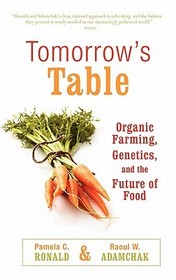
Tomorrow's Table
Organic Farming, Genetics, and the Future of Food
-
10% KEDVEZMÉNY?
- A kedvezmény csak az 'Értesítés a kedvenc témákról' hírlevelünk címzettjeinek rendeléseire érvényes.
- Kiadói listaár GBP 24.49
-
11 057 Ft (10 530 Ft + 5% áfa)
Az ár azért becsült, mert a rendelés pillanatában nem lehet pontosan tudni, hogy a beérkezéskor milyen lesz a forint árfolyama az adott termék eredeti devizájához képest. Ha a forint romlana, kissé többet, ha javulna, kissé kevesebbet kell majd fizetnie.
- Kedvezmény(ek) 10% (kb. 1 106 Ft)
- Kedvezményes ár 9 951 Ft (9 477 Ft + 5% áfa)
Iratkozzon fel most és részesüljön kedvezőbb árainkból!
Feliratkozom
11 057 Ft

Beszerezhetőség
A kiadónál véglegesen elfogyott, nem rendelhető. Érdemes újra keresni a címmel, hátha van újabb kiadás.
Why don't you give exact delivery time?
A beszerzés időigényét az eddigi tapasztalatokra alapozva adjuk meg. Azért becsült, mert a terméket külföldről hozzuk be, így a kiadó kiszolgálásának pillanatnyi gyorsaságától is függ. A megadottnál gyorsabb és lassabb szállítás is elképzelhető, de mindent megteszünk, hogy Ön a lehető leghamarabb jusson hozzá a termékhez.
A termék adatai:
- Kiadó Oxford University Press
- Megjelenés dátuma 2008. április 24.
- ISBN 9780195301755
- Kötéstípus Keménykötés
- Terjedelem232 oldal
- Méret 241x165x20 mm
- Súly 472 g
- Nyelv angol
- Illusztrációk 15 halftones, 30 line illustrations 0
Kategóriák
Hosszú leírás:
In modern agricultural politics, organic farming and genetic engineering occupy opposite ends of the spectrum. In the Ronald-Adamchak household, the world is not so black and white. Ronald is a professor of plant pathology at the University of California, Davis. Adamchak manages the student-run organic farm on campus. Together, they're exploring the juncture where their methods can (and they argue, should) meet to ensure environmentally sustainable food
production.
Revealing common principles and "leveling the playing field," this book roughly chronicles one year in the lives of the Ronald-Adamchack family. Through dialogue with friends and family, the authors thoughtfully explore the use of GE agriculture and the concerns expressed by consumers. They discuss the contents of their own largely organic pantry, what they choose to feed their children, and how over the last ten years of their marriage, they have developed a specific criteria for the use of
GE in agriculture. From their personal vantage points, Ronald and Adamchack explain what geneticists and organic farmers actually do, and help readers distinguish between fact and fiction in the debate about crop genetic engineering.
Loosely organized by season, each section of the book addresses a different issue related to the role of GE and organic farming in food production. Raoul provides a farmer's view of the philosophy and practice of organic farming and how it differs from conventional agriculture; Pam describes the tools and processes of genetic engineering, the potential ecological benefit of using GE technology to generate plants, and the associated risks. At the end of the book, they describe one of their
typical family dinners, explain their choice to bring both genetically engineered and organic food to their table, and share some of their family's best recipes.
Interspersed with nuggets of science, home made recipes (really) and anecdotes.

