

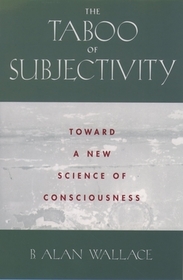
The Taboo of Subjectivity
Towards a New Science of Consciousness
-
10% KEDVEZMÉNY?
- A kedvezmény csak az 'Értesítés a kedvenc témákról' hírlevelünk címzettjeinek rendeléseire érvényes.
- Kiadói listaár GBP 42.99
-
19 409 Ft (18 485 Ft + 5% áfa)
Az ár azért becsült, mert a rendelés pillanatában nem lehet pontosan tudni, hogy a beérkezéskor milyen lesz a forint árfolyama az adott termék eredeti devizájához képest. Ha a forint romlana, kissé többet, ha javulna, kissé kevesebbet kell majd fizetnie.
- Kedvezmény(ek) 10% (kb. 1 941 Ft)
- Kedvezményes ár 17 468 Ft (16 637 Ft + 5% áfa)
Iratkozzon fel most és részesüljön kedvezőbb árainkból!
Feliratkozom
19 409 Ft

Beszerezhetőség
Megrendelésre a kiadó utánnyomja a könyvet. Rendelhető, de a szokásosnál kicsit lassabban érkezik meg.
Why don't you give exact delivery time?
A beszerzés időigényét az eddigi tapasztalatokra alapozva adjuk meg. Azért becsült, mert a terméket külföldről hozzuk be, így a kiadó kiszolgálásának pillanatnyi gyorsaságától is függ. A megadottnál gyorsabb és lassabb szállítás is elképzelhető, de mindent megteszünk, hogy Ön a lehető leghamarabb jusson hozzá a termékhez.
A termék adatai:
- Kiadó OUP USA
- Megjelenés dátuma 2004. március 4.
- ISBN 9780195173109
- Kötéstípus Puhakötés
- Terjedelem323 oldal
- Méret 232x155x17 mm
- Súly 363 g
- Nyelv angol 0
Kategóriák
Hosszú leírás:
This book takes a bold new look at ways of exploring the nature, origins, and potentials of consciousness within the context of science and religion. Alan Wallace draws careful distinctions between four elements of the scientific tradition: science itself, scientific realism, scientific materialism, and scientism. Arguing that the metaphysical doctrine of scientific materialism has taken on the role of ersatz-religion for its adherents, he traces its development from its Greek and Judeo-Christian origins, focusing on the interrelation between the Protestant Reformation and the Scientific Revolution. He looks at scientists' long term resistance to the firsthand study of consciousness and details the ways in which subjectivity has been deemed taboo within the scientific community. In conclusion, Wallace draws on William James's idea for a "science of religion" that would study the nature of religious and, in particular, contemplative experience.
In exploring the nature of consciousness, this groundbreaking study will help to bridge the chasm between religious belief and scientific knowledge. It is essential reading for philosophers and historians of science, scholars of religion, and anyone interested in the relationship between science and religion.
Wallace has looked carefully at the religious study of consciousness in both East and West, and no one can walk away from this book without a deeper impression of the profound understanding of religious consciousness that religious thinkers and traditions have achieved. The book will thus be welcomed by those who are interested in the phenomenology of religious consciousness as a tool for the cross-cultural study of religious phenomena. For these purposes it is heartily recommended.--The Journal of the American Academy of Religion

