

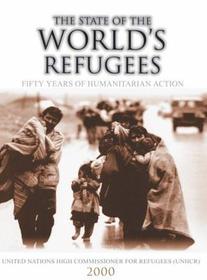
The State of the World's Refugees 2000
Fifty Years of Humanitarian Action
Sorozatcím: State of the World's Refugees;
-
10% KEDVEZMÉNY?
- A kedvezmény csak az 'Értesítés a kedvenc témákról' hírlevelünk címzettjeinek rendeléseire érvényes.
- Kiadói listaár GBP 49.99
-
22 570 Ft (21 495 Ft + 5% áfa)
Az ár azért becsült, mert a rendelés pillanatában nem lehet pontosan tudni, hogy a beérkezéskor milyen lesz a forint árfolyama az adott termék eredeti devizájához képest. Ha a forint romlana, kissé többet, ha javulna, kissé kevesebbet kell majd fizetnie.
- Kedvezmény(ek) 10% (cc. 2 257 Ft off)
- Kedvezményes ár 20 313 Ft (19 346 Ft + 5% áfa)
Iratkozzon fel most és részesüljön kedvezőbb árainkból!
Feliratkozom
22 570 Ft

Beszerezhetőség
Megrendelésre a kiadó utánnyomja a könyvet. Rendelhető, de a szokásosnál kicsit lassabban érkezik meg.
Why don't you give exact delivery time?
A beszerzés időigényét az eddigi tapasztalatokra alapozva adjuk meg. Azért becsült, mert a terméket külföldről hozzuk be, így a kiadó kiszolgálásának pillanatnyi gyorsaságától is függ. A megadottnál gyorsabb és lassabb szállítás is elképzelhető, de mindent megteszünk, hogy Ön a lehető leghamarabb jusson hozzá a termékhez.
A termék adatai:
- Kiadó OUP Oxford
- Megjelenés dátuma 2000. november 9.
- ISBN 9780199241064
- Kötéstípus Puhakötés
- Terjedelem352 oldal
- Méret 246x189x20 mm
- Súly 695 g
- Nyelv angol
- Illusztrációk illustrations, maps, tables 0
Kategóriák
Rövid leírás:
The year 2000 edition of The State of the World's Refugees analyses the international community's efforts to protect and assist refugees in the last fifty years. It provides a comprehensive account of the way in which approaches to the problem of forced human displacement have changed over time. It contains a wealth of statistical tables, graphs and maps and is invaluable resource for both academic researchers and the general public.
TöbbHosszú leírás:
UNHCR - the world's leading refugee organization - examines the major refugee crises of the last 50 years and the changing nature of international responses to the problem of forced displacement.
Refugees and other displaced people are the victims of events beyond their control: persecution, armed conflict, and human rights violations. Increasingly, they are also recognized as an important factor affecting both national security and world politics. With over a million people forced to flee their homes in Kosovo, East Timor, and Chechnya in 1999 alone, it is clear that the problem of forced human displacement will remain a major concern of the international community in the 21st century.
This book describes the development of international refugee law and the establishment of institutions devoted to the protection of refugees and other displaced people. It traces the major crises in which UNHCR has been involved since its establishment 50 years ago. Beginning with the mass displacement in Europe after the Second World War, the book addresses the flight of refugees from Hungary in 1956, crises associated with process of decolonization in Africa, the Bangladesh refugee emergency in 1971, the sustained exodus from Indochina which began in the 1970s, and the large outflows resulting from the protracted wars of the 1980s in Afghanistan, the Horn of Africa, and Central America.
Looking at the challenges of the 1990s, the book examines the popular shifts in the former Soviet region, the Kurdish exodus from northern Iraq following the Gulf war, the increasingly restrictive asylum policies in Europe and North America, and the recent crises in the Balkans, the Great Lakes region of Africa, East Timor, and the Caucasus.
In this timely and important publication, UNHCR emphasizes the need to find lasting solutions to problems of forced displacement. Without human security, it argues, there can be no peace and stability.
This account of the tragedies of the past half-century should be widely read throughout civil society and by those in power, both to realise the full scale of human suffering and to engender the necessary political will
Tartalomjegyzék:
Introduction
Early years
De-colonisation in Africa
Rupture in South Asia
Flight from Indo-China
Proxy Wars in Africa, Afghanistan and Central America
Repatriation and Peace-Building in the early 1990s
Asylum in the Industrialised World
Displacement in the Former Soviet Region
War and Humanitarian action: Iraq and the Balkans
The Rewandan Genocide and its aftermath
The Changing Dynamics of Displacement

