

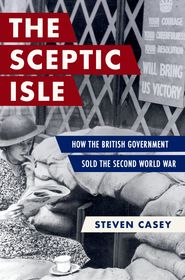
The Sceptic Isle
How the British Government Sold the Second World War
-
10% KEDVEZMÉNY?
- A kedvezmény csak az 'Értesítés a kedvenc témákról' hírlevelünk címzettjeinek rendeléseire érvényes.
- Kiadói listaár GBP 26.99
-
12 185 Ft (11 605 Ft + 5% áfa)
Az ár azért becsült, mert a rendelés pillanatában nem lehet pontosan tudni, hogy a beérkezéskor milyen lesz a forint árfolyama az adott termék eredeti devizájához képest. Ha a forint romlana, kissé többet, ha javulna, kissé kevesebbet kell majd fizetnie.
- Kedvezmény(ek) 10% (cc. 1 219 Ft off)
- Kedvezményes ár 10 967 Ft (10 445 Ft + 5% áfa)
Iratkozzon fel most és részesüljön kedvezőbb árainkból!
Feliratkozom
12 185 Ft

Beszerezhetőség
Még nem jelent meg, de rendelhető. A megjelenéstől számított néhány héten belül megérkezik.
Why don't you give exact delivery time?
A beszerzés időigényét az eddigi tapasztalatokra alapozva adjuk meg. Azért becsült, mert a terméket külföldről hozzuk be, így a kiadó kiszolgálásának pillanatnyi gyorsaságától is függ. A megadottnál gyorsabb és lassabb szállítás is elképzelhető, de mindent megteszünk, hogy Ön a lehető leghamarabb jusson hozzá a termékhez.
A termék adatai:
- Kiadó OUP USA
- Megjelenés dátuma 2026. augusztus 27.
- ISBN 9780197781876
- Kötéstípus Keménykötés
- Terjedelem392 oldal
- Méret 243x165x30 mm
- Súly 703 g
- Nyelv angol
- Illusztrációk 25 black and white halftones 0
Kategóriák
Rövid leírás:
Based on a massive array of overlooked primary sources, The Skeptic Isle presents a fast-paced narrative of the British attempt to sell World War II to its citizens. It weaves together government public relations, media reporting, political manoeuvering, and the public's response to reinterpret some of the most famous moments of British history, from Chamberlain and appeasement to Churchill's great speeches, from the Battle of Britain to the military campaigns in the Mediterranean and Western Europe, from food rationing to the Beveridge Report.
TöbbHosszú leírás:
A major reassessment of the British government's communication of the goals of the Second World War and how its propaganda undermined the people's faith in the reliability of war news and the credibility of political leaders.
While waging war against enemies overseas, governments also need to win the hearts and minds of their own citizens. The media is critical to delivering the official message, raising public support for war, maintaining morale, spelling out what is to be achieved, downplaying setbacks, and presenting a bright vision of the postwar future. ln public memory, the British people were united in their support for the Second World War. Yet this popular image of the People's War neglects the fact that the war had to be sold.
In this work stretching from appeasement in 1938 through victory, award-winning historian Steven Casey examines how media, government, and armed forces worked to convince the British public to support the war, as well as the ways the British home front often questioned and challenged the official line. Using a vast array of primary sources, some of them previously untapped, he looks at the broad range of problems and policies that needed to be defended and explained, censored and concealed. The venues range widely from the battlefield to the football field, from the rubble-strewn cities of blitzed Britain to the faraway outposts of Empire. ln his chronological narrative of the war, Casey shines light on numerous high-profile episodes, including Munich and Dunkirk, the Battle of Britain and the Blitz, evacuation and rationing, and the campaigns in Africa, Asia, and Europe. Throughout, Casey stresses how the British military forged a relationship with reporters, how this relationship shaped news coverage of the fighting, and how this coverage in turn exerted a profound impact on every other dimension of the government's private and public actions. No one before has examined how all the branches of the armed services kept the home front informed about progress and especially setbacks. Officials, Casey argues, failed to communicate effectively with the British people, which undermined public trust and called the credibility of the political leadership into question. Remarkably, the BBC and Fleet Street sometimes relayed German communiqu--s to the public because the British government failed to release timely reports of its own.
The Sceptic Isle provides a bold reassessment of how the British government sold the Second World War to the British public. It powerfully showcases how the attempt to mould and manipulate coverage of battles created a major credibility gap that cast a long shadow over the British government's efforts to sell the different dimensions of the Second World War to the home front.
Timely' is all too often applied to books by their publishers, but in an age where communication is all, this history more than merits it.
Tartalomjegyzék:
Acknowledgments
Introduction
1. Appeasement
2. Adjustment
3. Disaster
4. Destruction
5. Fightback
6. Morale
7. Mobilization
8. Empire
9. Allies
10. Return
11. Visions
12. Victory
Conclusion
Notes
Bibliography
Index

